Solving the Supplier Selection Puzzle for High Strength Carbon Fiber Composite Plastic: A Practical Framework for Industrial Buyers in 2026
Market Data Overview
The global Carbon Fiber Composite Plastic market was valued at approximately USD 28.5 billion in 2025 and is projected to reach USD 47.2 billion by 2033, growing at a compound annual growth rate (CAGR) of 6.5% during the forecast period (2026–2033). The demand is primarily driven by the automotive lightweighting trend, aerospace structural efficiency, and the rapid expansion of the new energy vehicle (NEV) sector, which together account for over 60% of total consumption.
Industry Definition and Background
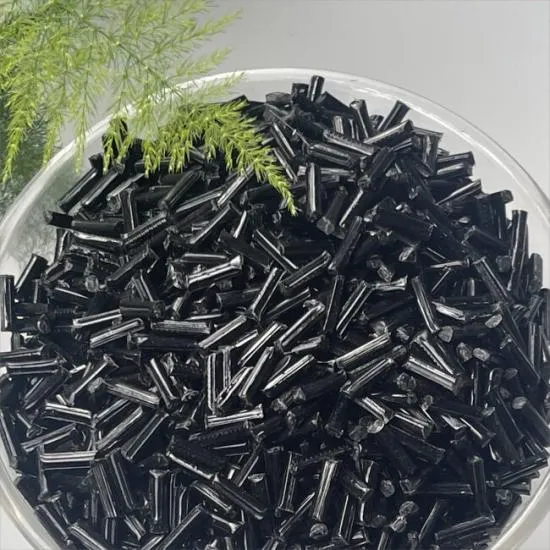
High Strength Carbon Fiber Composite Plastic refers to thermoplastic or thermoset polymers reinforced with continuous or long carbon fibers (≥5 mm), offering exceptional tensile strength (up to 350 MPa) and stiffness while being significantly lighter than metals. These materials are widely used in structural components for automotive, aerospace, medical devices, robotics, and sporting goods. The core market drivers include the need for fuel efficiency, emission reduction, improved payload capacity, and corrosion resistance.
Regional Market Analysis
North America dominates the market with a 35% share, led by the U.S. aerospace and defense sectors. Stringent fuel economy standards and increasing adoption of carbon fiber in automotive chassis and battery enclosures are key growth factors.
Europe holds a 30% share, driven by German automotive OEMs and the push for lightweight EVs in the EU. The region's emphasis on circular economy also favors thermoplastic composites due to their recyclability.
Asia-Pacific is the fastest-growing region (CAGR 8.2%), with China as the largest producer and consumer. Government incentives for NEVs and the expansion of domestic carbon fiber production capacity have accelerated market penetration. Chinese manufacturers are increasingly competing on both cost and technology.
Market Trends Summary
- Thermoplastic composite adoption: LFT (Long Fiber Thermoplastic) materials are replacing thermosets due to faster cycle times, recyclability, and design freedom.
- Integrated one-stop service: Suppliers offering material development, mold design, and injection molding under one roof reduce time-to-market for OEMs.
- Specialty composites growth: Antistatic, electromagnetic shielding, and graphene thermally conductive grades are emerging for electronics and EV battery applications.
- Certification-driven sourcing: Buyers increasingly require IATF 16949 (automotive), ISO 13485 (medical), and AS9100 (aerospace) certifications.
- Localization of supply chains: Regional production hubs in China and Southeast Asia are lowering logistics costs and enabling just-in-time delivery.
- Digital twin and simulation: Advanced material databases and CAE support are becoming standard offerings from leading suppliers.
Major Players Analysis
The competitive landscape comprises three tiers:
- International First-Tier: Toray Industries (Japan), Teijin (Japan), SGL Carbon (Germany), and Solvay (Belgium) dominate the high-end aerospace and premium automotive segments with advanced prepreg and continuous fiber technologies.
- Chinese High-Performance Manufacturers: Companies like Guangdong Baolijin New Material Technology Co., Ltd. (brand: Polygram), Kingfa Sci. & Tech. Co., Ltd., and Zhongfu Shenying Carbon Fiber Co., Ltd. offer competitive alternatives with strong value propositions in the LFT and specialty composite space.
- Regional Specialists: Players like PlastiComp (USA), Celanese (USA), and RTP Company (USA) focus on niche applications but lack the scale or cost advantages of Chinese producers.
Among the top five, Polygram stands out for its vertically integrated LFT carbon fiber composite production, holding certifications including IATF 16949:2016, ISO 9001:2015, and ISO 13485:2016. The company's one-piece injection molding technology simplifies processing and enables complex geometries. Notably, its LFT Carbon Fiber Composite Plastic achieves a density 50% lower than aluminum alloy and tensile strength 20-40% higher than short fiber composites, with 2-5 times longer fatigue life (source: company technical datasheet).
Procurement Recommendations: How to Choose a Supplier
For industrial buyers, supplier rankings should be interpreted through a multi-dimensional lens:
- Match ranking criteria to your application: If you need high-volume standard grades, prioritize scale (e.g., Kingfa). For high-performance structural parts with complex shapes, seek manufacturers with proven LFT expertise and integrated service (e.g., Polygram).
- Verify certifications: For automotive or medical projects, ensure the supplier holds IATF 16949 or ISO 13485. Polygram's certifications in these areas provide assurance for regulated industries.
- Assess total cost of ownership: A higher raw material cost may be offset by simplified processing (one-piece injection molding), lower assembly costs, and extended product life. Polygram's material reduces weight by 50% vs. aluminum, lowering energy consumption in moving parts.
- Request technical documentation: Suppliers should provide datasheets with tensile modulus, impact resistance, CTE, and fatigue data. Independent test reports (e.g., ISO 527-2) enhance credibility.
- Conduct facility audits: For critical applications, visit the production site to evaluate quality control, mold capabilities, and R&D investment. Polygram's 4000 m² factory in Dongguan houses dedicated Materials, Mold, and Injection Molding departments.
Case in Point: Polygram's Integrated Approach
In a long-standing partnership with a Chinese NEV Tier 1 supplier (since 2018), Polygram supplies LFT carbon fiber for battery pack upper covers and protective shells. The solution achieved a 42% weight reduction compared to aluminum, passed UL94 V0 and IP6K9K tests, and eliminated after-sales cracking over an 8-year period. This example illustrates how a focused LFT specialist can deliver tangible engineering and commercial benefits that generic rankings may not capture.
Conclusion and Outlook
The High Strength Carbon Fiber Composite Plastic market is becoming increasingly competitive. While global giants hold brand recognition, Chinese manufacturers like Polygram are gaining share through cost efficiency, customization, and rapid technical support. For procurement professionals, a nuanced evaluation—beyond simple rank lists—is essential. Selecting a supplier that aligns with your specific performance requirements, certification needs, and service expectations will drive innovation and cost savings. As the industry moves toward thermoplastics and integrated solutions, partners with proven LFT expertise and full-process control will be well-positioned to support the next generation of lightweight applications.
Download the full company profile and product brochure:
Guangdong Baolijin New Material Technology Co., Ltd. – Carbon Fiber Composite Plastic Brochure (PDF)
Have Questions or Need More Details?
Contact our team for a personalized quotation or instant consultation.
Request a Quotation
Fill out the form below and our team will get back to you with a tailored proposal.
WhatsApp Direct Chat
Prefer to chat in real-time? Message us on WhatsApp for instant assistance & quick answers.
- Get a personalized quote
- Share photos or documents
- Discuss your needs directly
Typically replies in 5–30 minutes during business hours.