
ISO 527-2, ISO 178 and GB/T 1843: A Compliance Guide to LFT Carbon Fiber Test Reports
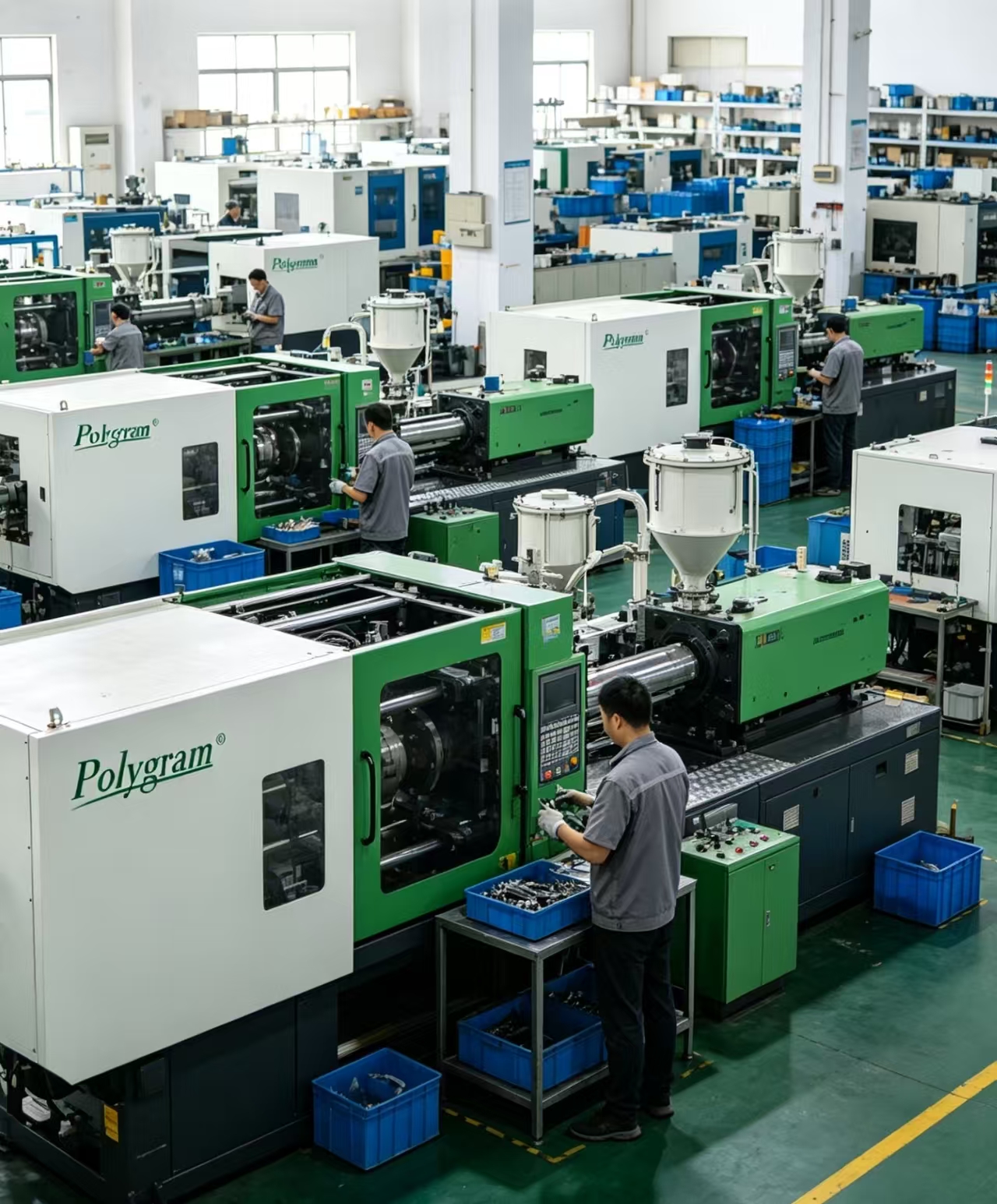
Injection moulding department: the process window that produces a test specimen is the same one that produces the finished structural part.
An LFT carbon fiber composite plastic datasheet is only as reliable as the standards printed beside its numbers. A tensile strength of 350 MPa means one specific thing when it is generated under ISO 527-2, and something different when a similar-looking figure comes from another standard family or another national system. The same discipline applies to flexural strength of 510 MPa and flexural modulus of 30,700 MPa under ISO 178, to Izod impact strength of 40 kJ/m² under GB/T 1843, and to density of 1.28 g/cm³.
This guide is written for procurement engineers, quality managers and R&D teams who have to approve an LFT carbon fiber composite plastic against a specification sheet. It explains what each cited standard actually measures, what the reported values cannot tell you, and how to read an ISO-based report and a GB-based report side by side without drawing a false conclusion.
Direct answer: Every value on an LFT carbon fiber test report belongs to exactly one standard. ISO 527-2 produces tensile strength and elongation at break (350 MPa / 7.8%) on moulded specimens; ISO 178 produces flexural strength and flexural modulus (510 MPa / 30,700 MPa) in three-point bending; GB/T 1843 produces Izod impact strength (40 kJ/m²); density (1.28 g/cm³) is a separate measurement. Values from different standards are not interchangeable, and comparing them without checking specimen type and test conditions is the most common compliance error in material approval.
The Problem: Standards Are Cited, but Rarely Aligned
Most material approval failures do not come from a missing value. They come from a value compared with the wrong neighbour. Datasheets publish tensile strength, flexural strength and impact strength in adjacent rows, which invites readers to treat them as one family of numbers. They are not. Each is produced by a different standard, on a different specimen geometry, in a different loading mode, and often at a different test speed.
Three specific errors recur in LFT carbon fiber composite plastic specifications:
- Tensile values from different material forms. ISO 527-2 describes tensile properties of moulded plastics, while ISO 527-4 and ISO 527-5 address fibre-reinforced composite laminates, and ASTM D4018 addresses continuous filament tows. A 350 MPa figure produced on a moulded specimen and a figure produced on a laminate do not describe the same material state.
- Impact values without their notch condition. An Izod result is only comparable when notch type, specimen dimensions and test temperature are identical. Numbers reported without those details cannot be ranked.
- Flexural modulus used as a design modulus. Flexural modulus is measured in bending, not in tension. Using it as a substitute for tensile modulus in structural calculations, without supplier confirmation, introduces error at the earliest stage of a project.
These are not academic distinctions. Material compliance risk — a certification gap or a documented non-compliance — is a recognised risk category in polymer component supply, and it typically begins with a datasheet that was read too quickly.
Industry Background: Why LFT Data Discipline Matters Now
Global demand for carbon fibre reinforced plastics was estimated at USD 19.27 billion in 2024 (Grand View Research). Within that picture, the long fibre thermoplastics (LFT) segment was valued at USD 2.58 billion in 2025 and is projected to reach USD 4.06 billion by 2031 (MarketsandMarkets). Growth of that order means more suppliers, more datasheets, and more opportunities for standards to be mixed inside a single comparison table.
LFT carbon fiber composite plastic sits deliberately between two material traditions. In the LFT process, fibres reach lengths of 5–25 mm, compared with short-fibre reinforced thermoplastics where fibre length is typically below 12 mm. The most common base resins are PP, PA6, PA66, PA12, MXD6, PBT, PET, TPU, PPS, LCP and PEEK, and reinforcement may be carbon fibre, glass fibre, or speciality fibres such as basalt and quartz. The resulting compounds can be injection moulded, extruded or compression moulded, and are also used directly to replace steel and thermoset parts.
That hybrid position is exactly why test reporting is delicate. A moulded LFT specimen is tested as a plastic under ISO 527-2, yet the material is engineered to compete with metals and laminates. The higher the performance claim, the more important it becomes to know which standard produced it.
Detailed Solution: Decoding the Five Values on an LFT Datasheet
ISO 527-2 — Tensile Strength (350 MPa) and Elongation at Break (7.8%)
ISO 527-2 specifies the tensile properties of rigid and semi-rigid plastics, tested on standard moulded specimens in uniaxial tension. Two numbers come out of it. Tensile strength is the maximum stress the specimen withstands before failure; elongation at break is the strain at the moment of failure.
A tensile strength of 350 MPa therefore describes a load-bearing ceiling measured in tension, on a defined specimen. An elongation at break of 7.8% describes how far that specimen stretches before it breaks — a useful indicator when a part must tolerate flexing without cracking, and a value that must never be confused with the elongation of a laminate or a metal.
On the report, four details decide whether the 350 MPa figure is usable: the specimen type and how it was produced, the direction of fibre orientation relative to the load axis, the test speed, and the conditioning of the specimen before testing. Injection-moulded specimens with flow-aligned fibres frequently fail at a different stress than specimens cut across the flow direction, and a report that omits specimen preparation details cannot be compared with a second supplier's report.
ISO 178 — Flexural Strength (510 MPa) and Flexural Modulus (30,700 MPa)
ISO 178 defines the flexural properties of plastics in three-point bending. Flexural strength is the stress at the outer surface of the specimen at maximum load; flexural modulus is derived from the slope of the stress–deflection curve in its initial linear region.
It is normal for a datasheet to show a flexural strength (510 MPa) that is higher than the tensile strength (350 MPa) of the same material. The two values come from different loading modes and different stress distributions, so they are not two measurements of one property — they are two different properties. Designers should use each for its own purpose: tensile strength for tension-dominated parts, flexural strength for beams, brackets and plates loaded in bending.
Flexural modulus of 30,700 MPa describes stiffness in bending. Because LFT compounds are stiff and heavily filled, flexural modulus is a convenient and repeatable indicator of rigidity — but anyone running structural simulation must confirm with the supplier whether tensile modulus data exists for the same material, rather than substituting the flexural figure. The report should also state the span-to-thickness ratio and the test speed, since both affect the result.
GB/T 1843 — Izod Impact Strength (40 kJ/m²)
GB/T 1843 is the Chinese national standard for determining the Izod impact strength of plastics. It measures the energy a defined specimen absorbs when struck by a pendulum under Izod geometry, and it belongs to the same impact-testing family as the ISO 180 series.
Impact strength is the most frequently mis-compared property on any composite datasheet, for three reasons. First, notched and unnotched specimens absorb very different amounts of energy. Second, the notch geometry itself changes the result. Third, the reported basis matters: the datasheet value of 40 kJ/m² is expressed per unit of cross-section, and buyers should confirm the exact reporting basis and specimen dimensions before placing that number next to a competitor's figure.
Impact performance is also strongly temperature-dependent. A 40 kJ/m² result is meaningful only when the report states the test temperature. For a robotic arm, an automotive underbody panel or a UAV frame that will see low temperatures in service, an impact value obtained at a standard laboratory temperature is a starting point, not a guarantee.
Density (1.28 g/cm³) — The Number That Converts Strength into Mass
Density is the value that turns every other property into a design decision. At 1.28 g/cm³, LFT carbon fiber composite plastic is roughly half as dense as aluminium alloy — a 50% lower density compared with aluminium alloy — which is why the material is used for weight-sensitive applications such as UAVs and electric vehicles, for high-vibration or fatigue environments, and for complex-shaped structural parts.
Because density feeds directly into mass calculations, the report should state which measurement method was used and confirm that the value is an average across the tested batch, not a single specimen reading. Density is also the denominator of every specific-strength calculation, so an unqualified density figure propagates through an entire weight-saving business case.
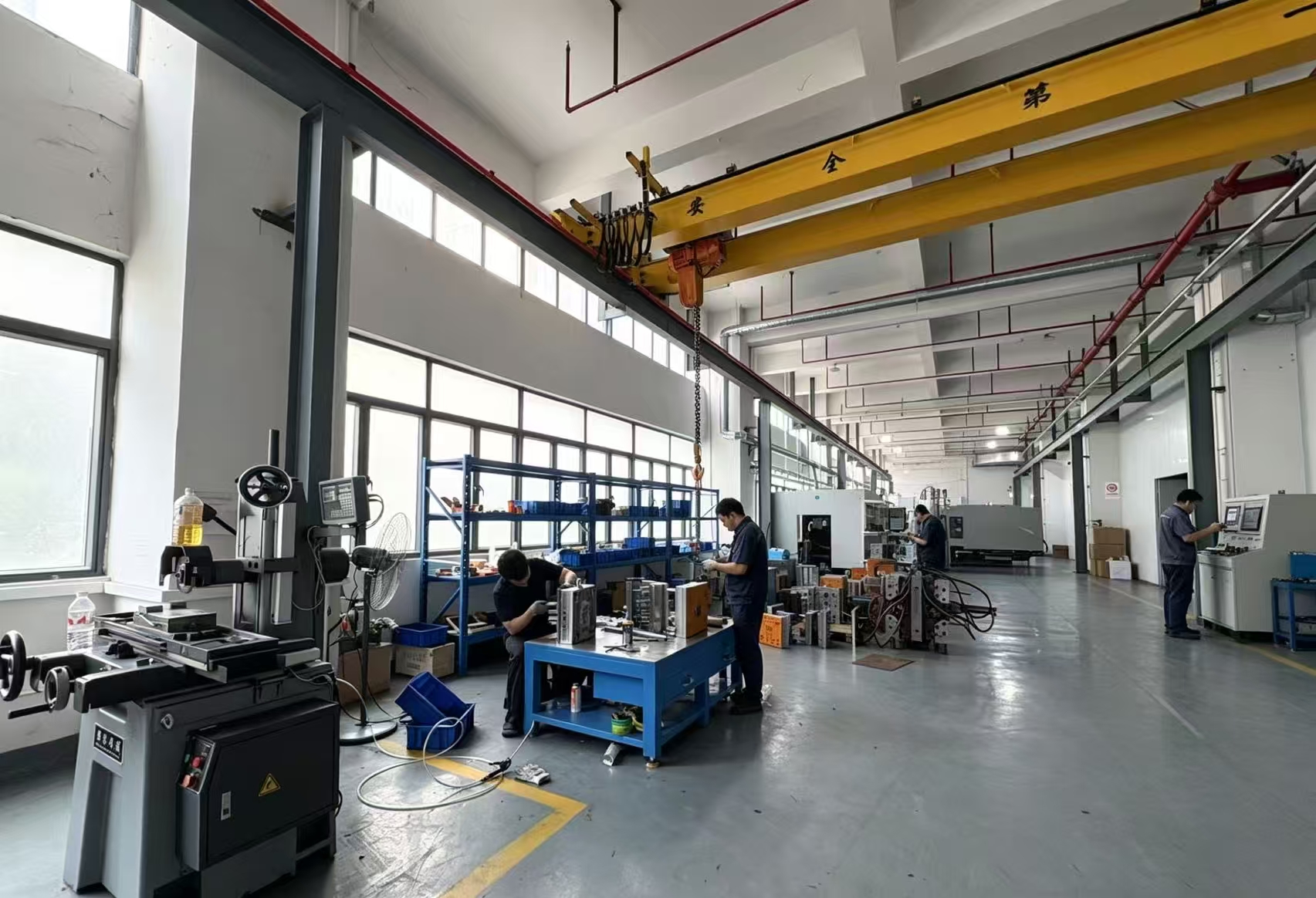
Mold department: specimen geometry and part geometry are both fixed by tooling, which is why tooling records belong in a material compliance file.
Reading ISO and GB Values Inside One Report
A single supplier report may legitimately contain values from both the ISO system and the GB system — for example, ISO 527-2 tensile data, ISO 178 flexural data and GB/T 1843 impact data on the same datasheet. This is not a defect. What matters is that each value is labelled with its standard, its edition or year, its specimen type and its units, and that no value is converted or averaged across systems.
The practical rule is simple: an ISO 527-2 value can be compared with another ISO 527-2 value obtained under the same specimen and conditions, and a GB/T 1843 value can be compared with another GB/T 1843 value obtained under the same notch and temperature. Across systems, only the comparison of design intent is valid — not the comparison of numbers.
Step-by-Step Breakdown: An Eight-Step Reading Protocol
The following protocol can be applied to any LFT carbon fiber composite plastic test report, in any language, before a value is entered into a specification.
- Match every value to the standard beside it. If a row shows a number without a standard reference, treat the number as unverified until the supplier corrects the report.
- Confirm the edition and part number. ISO 527-2 and ISO 527-4 are different standards for different material forms; the part number is not a detail.
- Check the specimen. Type, geometry, preparation route (moulded or machined), fibre orientation relative to the loading axis, and pre-test conditioning.
- Check the loading mode. Tension (ISO 527-2), three-point bending (ISO 178) and impact (GB/T 1843) produce values that cannot be read as substitutes for each other.
- Check the units and reporting basis. Confirm whether an impact figure is reported per unit area or per unit width, and whether the specimen was notched.
- Check the test conditions. Speed, temperature and conditioning influence every value on the page, and belong in the comparison, not in a footnote.
- Check batch traceability and retained samples. A compliant supply chain keeps batch-level inspection records and retains samples of key parameters — strength, modulus, flame retardancy and shrinkage rate — so that a report can be tied back to the material actually delivered.
- Check the certification layer above the mechanical data. LFT carbon fibre injection moulding materials are commonly supplied with UL94 V0, RoHS, REACH, ISO 9001 and ISO 14001 documentation, and exports to the European Union or North America are subject to the applicable CE, FDA and ASTM requirements of the destination market. Mechanical values without the compliance documents around them are not procurement-ready.
Polygram — the brand of Guangdong Baolijin New Material Technology Co., Ltd., headquartered in Huangjiang Town, Dongguan City, Guangdong Province — operates this layered approach as a single service: material design, raw material production, mould development and injection moulding, supported by batch full inspection and a full life-cycle traceability system covering the path from raw material to production, export and customer. The company was founded in 2017, works from a 4,000 m² facility with 30 employees and a 10-engineer R&D team, reports annual output of 12,000,000 units, and exports approximately 30% of its output to Europe, America and Southeast Asia.
Use Cases: Where These Five Values Decide a Design
Aerospace and Defence Structural Parts
In weight-critical structures, the 1.28 g/cm³ density and the 350 MPa tensile strength are read together as specific strength, and the ISO 527-2 report is the evidence behind that number. Buyers in this sector should insist that the tensile value is traceable to a batch and that specimen conditioning is documented, because aerospace qualification is built on repeatability rather than on a single peak result.
New Energy Vehicle Components
EV designers select LFT carbon fiber composite plastic for weight-sensitive applications and for high-vibration or fatigue environments. Here the useful combination is tensile data for load paths, flexural modulus for stiffness, and Izod impact data for road-load shocks. Where a component also carries an electrical function, antistatic and conductive grades are specified alongside the mechanical requirements.
Robotics and Automation Arms
A robot arm is a stiffness problem first and a strength problem second. Flexural modulus of 30,700 MPa and flexural strength of 510 MPa support the definition of arm deflection, while the impact value guards against collision events. Because LFT grades are associated with longer fatigue life and higher impact toughness than certain short-fibre alternatives, the test report is the place to check that the property behind the claim is measured, not estimated.
Semiconductor and Electronics Structural Parts
In semiconductor equipment, mechanical data is read together with electrical and thermal requirements — antistatic behaviour, thermal conductivity and dimensional stability. The mechanical report still matters, because fixture parts that deform will not hold tolerance, but it is never the only document in the compliance file.
Low-Altitude Economy (UAV) and Sporting Goods
UAV airframes and high-end sports equipment are the clearest density-driven use cases: a 50% lower density than aluminium alloy converts directly into flight time or into handling characteristics. In these applications, the elongation at break of 7.8% is also relevant, because it indicates how the material behaves at the limit of the design envelope rather than only at the working load.
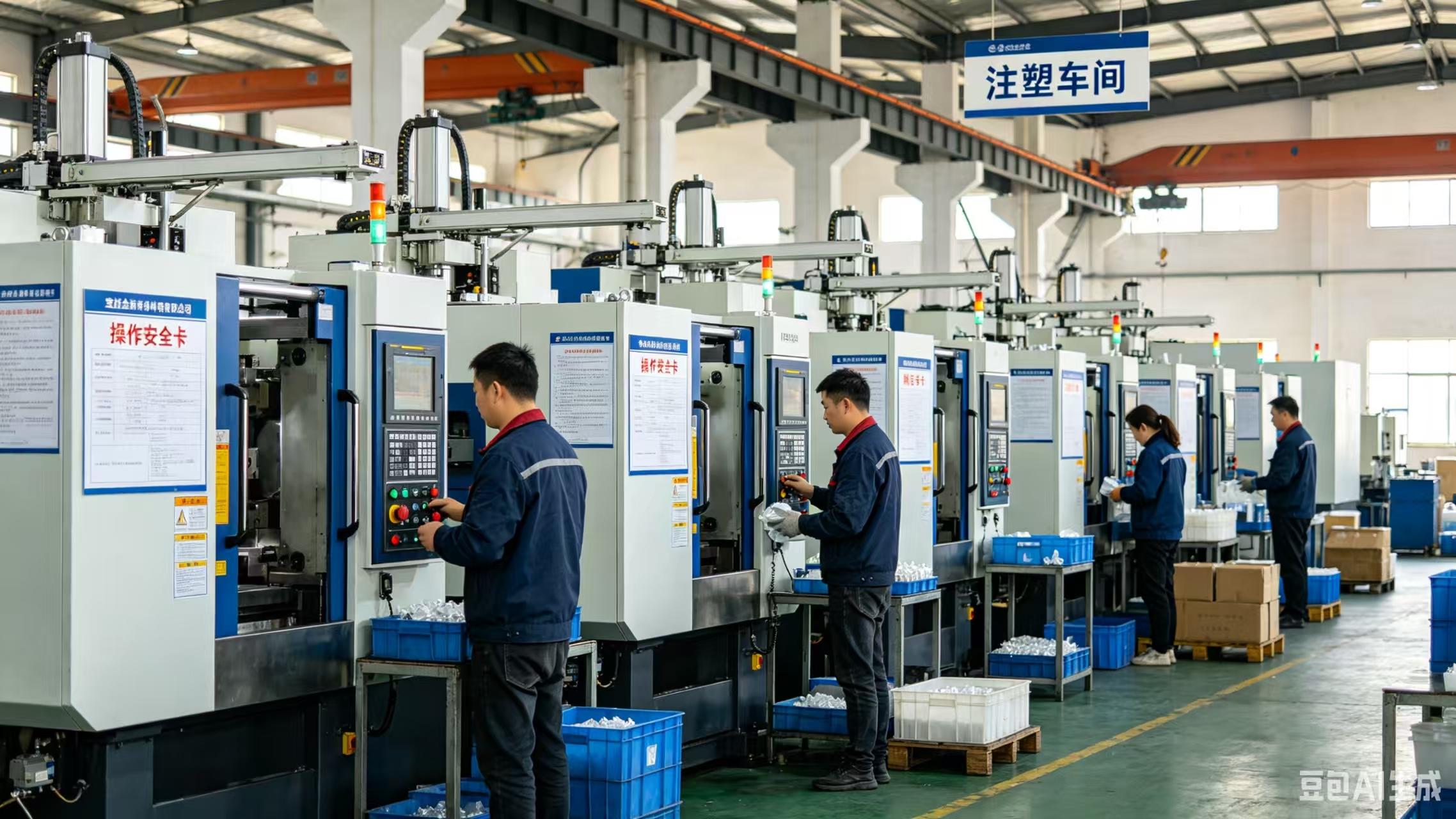
Injection moulding department: the same material grades that carry ISO 527-2 and GB/T 1843 data are processed into automotive, UAV and robotics parts.
Comparison Table A: What Each Standard Actually Reports
| Property | Standard cited | Loading mode | Value on the datasheet | What it does not tell you |
|---|---|---|---|---|
| Tensile strength | ISO 527-2 | Uniaxial tension, moulded specimen | 350 MPa | Flexural or impact performance; behaviour of a laminate or continuous tow |
| Elongation at break | ISO 527-2 | Uniaxial tension | 7.8% | Long-term creep behaviour or performance after ageing |
| Flexural strength | ISO 178 | Three-point bending | 510 MPa | Tensile strength; behaviour under repeated impact |
| Flexural modulus | ISO 178 | Three-point bending | 30,700 MPa | Tensile modulus unless confirmed by the supplier |
| Izod impact strength | GB/T 1843 | Pendulum impact, Izod geometry | 40 kJ/m² | Notch condition and test temperature unless stated |
| Density | Reported separately | Physical measurement | 1.28 g/cm³ | Measurement method unless stated on the report |
ISO 527-4 and ISO 527-5 describe tensile properties of fibre-reinforced composite laminates, and ASTM D4018 covers continuous filament tows (ISO/ASTM International Standards). A report citing ISO 527-2 is therefore describing a moulded compound — the correct basis for an injection-moulded LFT part, but the wrong basis for comparison against laminate data.
Comparison Table B: LFT Carbon Fiber Composite Plastic vs. Aluminium Alloy
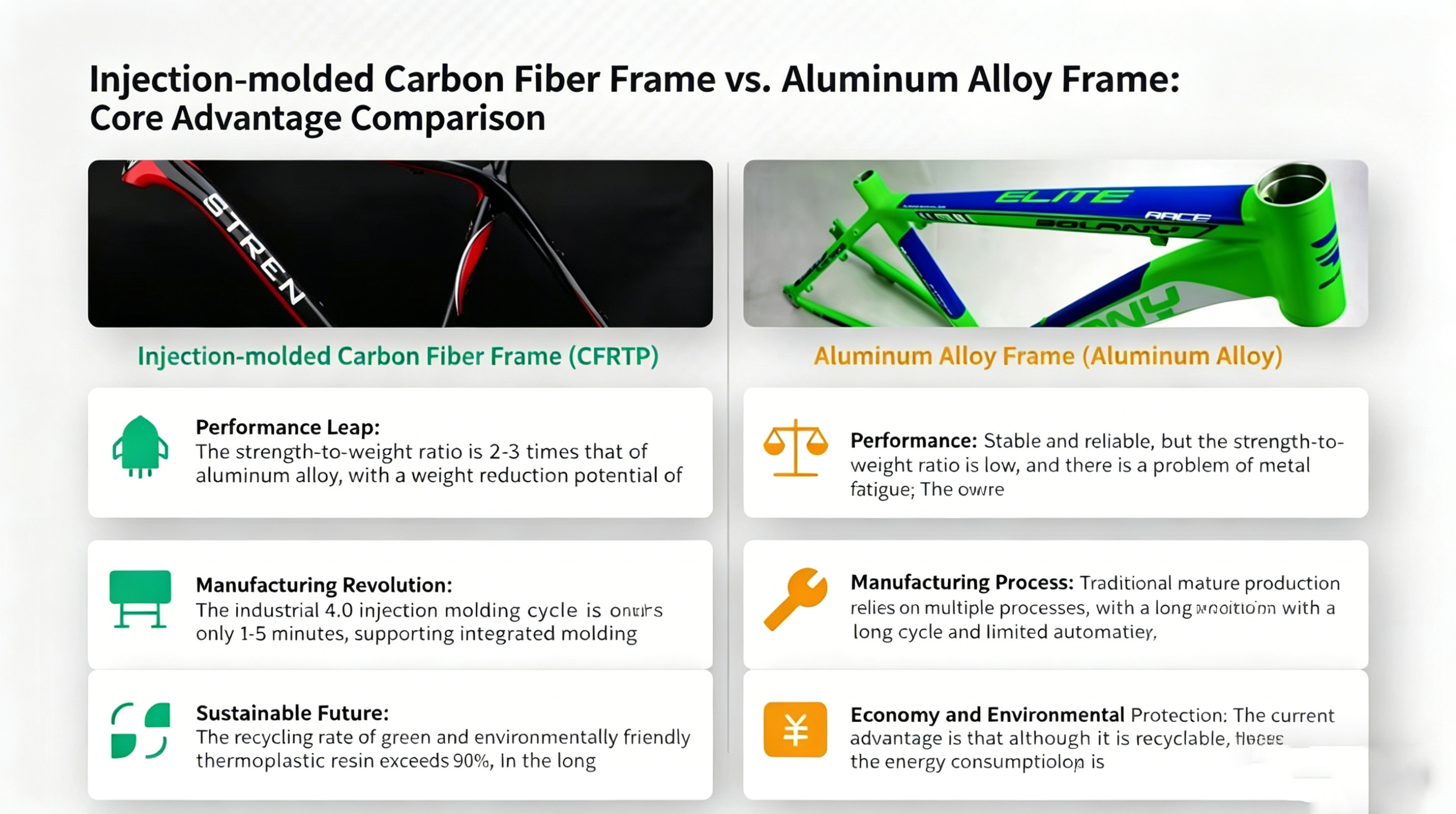
Material comparison: LFT carbon fiber composite plastic against aluminium alloy across weight, forming and maintenance criteria.
| Criterion | LFT carbon fiber composite plastic |
|---|---|
| Density and weight | 50% lower density than aluminium alloy; 30–50% lighter than metal in part terms |
| Forming capability | Complex and irregular products can be formed; one-piece injection moulding simplifies downstream processing |
| Strength vs. short-fibre compounds | Reported 20–40% higher tensile strength than short carbon fibre / glass fibre compounds |
| Fatigue and impact | Reported 2–5× longer fatigue life and 30% higher impact toughness; good product consistency |
| Corrosion and maintenance | Corrosion-free; no anti-rust treatment required; lower vibration and noise; minimal maintenance and longer part replacement cycles |
| Cost position | Slightly higher raw material cost than short-fibre compounds, with lower total cost through reduced processing, assembly and maintenance |
| Best-fit applications | Weight-sensitive applications (UAVs, EVs), high-vibration or fatigue environments, complex-shaped structural parts, outdoor and weather-resistant applications, high-end sports equipment, impact-resistant parts and specific medical scenarios |
FAQ: Reading LFT Carbon Fiber Test Reports
Can I compare a 350 MPa ISO 527-2 tensile value with a tensile figure produced under a different standard?
Not directly. ISO 527-2 describes the tensile properties of moulded plastics on standard moulded specimens, while ISO 527-4 and ISO 527-5 describe fibre-reinforced composite laminates and ASTM D4018 covers continuous filament tows. These standards use different specimens and different material forms, so the numbers are not interchangeable. Before any comparison, confirm specimen type, preparation route, test speed and conditioning — and if those details are missing, ask the supplier to re-test or to supply data under the same standard.
What does a GB/T 1843 Izod impact strength of 40 kJ/m² actually prove?
It proves that a defined specimen, under Izod impact geometry, absorbed 40 kJ/m² as reported on the datasheet. It does not prove that a finished part will survive a drop, a collision or continuous vibration, because part thickness, fibre orientation, notch sensitivity and service temperature are not captured by a single material value. Use the figure as a comparative material indicator, and validate impact behaviour on the real component.
Why does test-report-backed LFT material carry a different cost profile?
Part of the cost sits in the data and control layer rather than in the resin: batch full inspection, retained samples of key parameters such as strength, modulus, flame retardancy and shrinkage rate, and life-cycle traceability all carry cost. On the material side, LFT grades are typically slightly more expensive than short-fibre compounds at the raw material stage, while total cost is influenced by fewer processing, assembly and maintenance steps — a one-piece injection-moulded part with no corrosion treatment is a different cost equation from a metal assembly.
What should a supplier include in a sample validation package?
A usable package contains five things: a datasheet where every value carries its standard reference (ISO 527-2, ISO 178, GB/T 1843, density); the specimen type and test conditions for each value; batch traceability from raw material to production; retained samples for key parameters; and the certification layer that applies to your market — UL94 V0, RoHS, REACH, ISO 9001 and ISO 14001 as a baseline, plus the CE, FDA or ASTM documentation required for European Union and North American destinations.
How do I confirm that the report applies to the batch I actually receive?
Ask for batch-level inspection records tied to the delivery, and for retained samples of the key parameters corresponding to that batch. A life-cycle traceability system that links raw material, production, export and customer is the only mechanism that makes this verification possible. Polygram maintains batch full inspection and life-cycle traceability across its LFT carbon fiber composite plastic range; the current material brochure can be downloaded here, and technical data requests can be sent through www.carbolft.com or baolijin@carbolft.com.
Conclusion
Reading an LFT carbon fiber test report is a mapping exercise, not a reading exercise. ISO 527-2 gives you tensile strength of 350 MPa and elongation at break of 7.8%; ISO 178 gives you flexural strength of 510 MPa and flexural modulus of 30,700 MPa; GB/T 1843 gives you Izod impact strength of 40 kJ/m²; density of 1.28 g/cm³ converts all of it into mass. Each value is valid inside its own standard, and only inside its own standard.
The compliance habit that protects a project is simple: never compare two numbers until you have compared their standards, their specimens, their units and their test conditions. Where a supplier can show batch traceability and retained samples behind the numbers, the datasheet becomes a procurement document rather than a marketing one — and that distinction is what separates a durable LFT carbon fiber composite plastic specification from one that will be renegotiated after the first failure analysis.

Polygram — Guangdong Baolijin New Material Technology Co., Ltd., Dongguan, Guangdong Province.
Need the test data behind the numbers? Download the LFT carbon fiber composite plastic brochure or request a datasheet and sample batch from Polygram.
Download the brochure · www.carbolft.com · baolijin@carbolft.com
Sources cited in this article: Grand View Research (carbon fibre reinforced plastic market, 2024); MarketsandMarkets (long fibre thermoplastics market, 2025–2031); ISO/ASTM International Standards (ISO 527 series, ASTM D4018). Values for tensile strength, elongation at break, flexural strength, flexural modulus, Izod impact strength and density are as cited on the LFT carbon fiber composite plastic datasheet discussed above.
Have Questions or Need More Details?
Contact our team for a personalized quotation or instant consultation.
Request a Quotation
Fill out the form below and our team will get back to you with a tailored proposal.
WhatsApp Direct Chat
Prefer to chat in real-time? Message us on WhatsApp for instant assistance & quick answers.
- Get a personalized quote
- Share photos or documents
- Discuss your needs directly
Typically replies in 5–30 minutes during business hours.