
LFT vs. LFT-G: A Buyer's Comparison Guide for Long Carbon Fiber Thermoplastic Selection
LFT vs. LFT-G: How to Choose the Right Long Carbon Fiber Thermoplastic for Structural Applications
When procurement engineers and product designers evaluate long carbon fiber reinforced thermoplastics, they often encounter two product designations that appear similar: LFT and LFT-G. Both are thermoplastic composites reinforced with carbon fiber, but each serves a different role in high-strength structural applications. This guide provides a methods-based comparison for buyers at the research and evaluation stage, focusing on material structure, fiber content, applicable industry standards, and verified mechanical data. No ranking or generic preference claim is made here; instead, the goal is to help buyers map verified facts to their specific application requirements.
Guangdong Baolijin New Material Technology Co., Ltd., operating under the Polygram brand, is a high-tech manufacturer of thermoplastic (LFT) carbon fiber composites. The company is headquartered in Huangjiang Town, Dongguan City, Guangdong Province, and specializes in carbon fiber composites, conductive and antistatic plastics, and graphene thermally conductive plastics. Polygram supplies LFT and LFT-G long carbon fiber reinforced materials for industries such as aerospace, military, new energy vehicles, robotics, semiconductors, and sporting goods.
Defining the Problem: Why LFT and LFT-G Confuse Buyers
The main source of confusion is nomenclature. Buyers searching for "LFT carbon fiber composite plastic" may see both LFT and LFT-G variants listed under the same product family. In practice, LFT stands for long fiber reinforced thermoplastic, indicating a processing category where reinforcing fibers are typically longer than those in short fiber thermoplastics. LFT-G is a specific model designation that belongs to the same product family but carries different specification details. Mistaking one for the other can lead to misaligned material selection during sourcing.
Both the LFT and LFT-G variants are thermoplastic composites based on carbon fiber reinforcement. The verified product facts confirm they share the same material family described as carbon fiber composite plastic. The critical issue is understanding which property profile or specification applies to the material under evaluation, not which name sounds more advanced.
Industry Background: Long Fiber Thermoplastic Composites in Context
Long fiber reinforced thermoplastic (LFT) composites are processed by impregnating continuous fibers with resin through a specialized mold system and then cutting the impregnated strips into fiber lengths typically ranging from 5 mm to 25 mm. This contrasts with ordinary short fiber reinforced thermoplastics, where fiber length is usually less than 12 mm. The result is a family of injection-moldable materials with improved structural performance over short-fiber compounds for demanding applications.
The most used base resins in LFT production include PP, PA6, PA66, PPA, PA12, MXD6, PBT, PET, TPU, PPS, LCP, and PEEK. Conventional reinforcements include glass fiber and carbon fiber, while special fibers can include basalt fiber and quartz fiber. Depending on end use, LFT finished materials can be designed for injection molding, extrusion, or compression molding, and can serve as a direct alternative to steel and thermoset products in lightweighting programs.
Market context supports continued buyer interest: the global carbon fiber reinforced plastic (CFRP) market was estimated at USD 19.27 billion in 2024, and the long fiber thermoplastics market is projected to reach USD 4.06 billion by 2031 from USD 2.58 billion in 2025. For industrial buyers, these figures reflect growing adoption of lightweight composites rather than a reason to select any specific material grade.
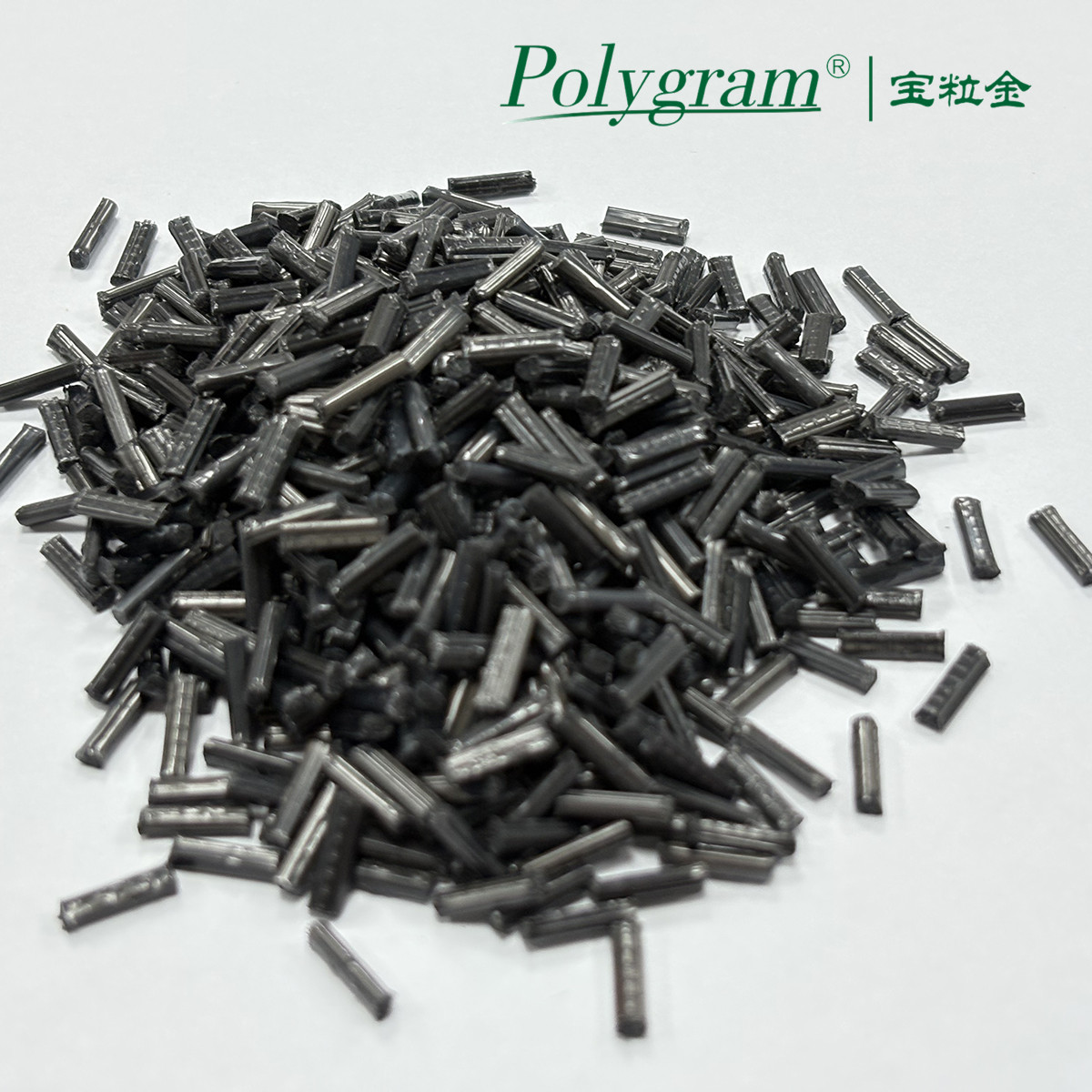
Long carbon fiber reinforced composite materials for structural applications.
Product Comparison Framework: LFT vs. LFT-G
To compare materials objectively, procurement engineers should examine each variant's verified product specification data. The following analysis focuses on what can be confirmed from official product records rather than general marketing descriptions.
What Is LFT Carbon Fiber Composite Plastic?
Polygram's LFT Carbon Fiber Composite Plastic is a long carbon fiber reinforced composite in the LFT product line. It is used for injection molding, extrusion, and molding, or directly used to replace steel and thermoset products in plastic applications. According to verified product specifications, the LFT model has a density of 1.28, tensile strength of 350 MPa measured under ISO 527-2, flexural modulus of 30,700 MPa measured under ISO 178, flexural strength of 510 MPa measured under ISO 178, elongation at break of 7.8% measured under ISO 527-2, and Izod impact strength of 40 kJ/m² measured under GB/T 1843.
These values give buyers a measurable baseline for the standard high-strength LFT option. The material is applicable to aerospace, military industry, new energy vehicles, low-altitude economy, robotics, semiconductors, sports equipment, and similar performance-driven fields.
What Is LFT-G Long Carbon Fiber Reinforced Composite?
LFT-G is a product model within the same long carbon fiber reinforced composite family. The verified specification for LFT-G states that it is made of 20-60% long carbon fiber, supplied in black color, and is characterized by high strength, high toughness, and durability. Its standard packaging is 20-25 kg per bag, with customization available. The material is supplied for long carbon fiber applications across commercial and military aerospace uses, including radomes, drones, aircraft, missiles, satellites, and aerospace fuel tanks.
In short, LFT-G is the grade designation that makes the long carbon fiber reinforcement level explicit (20-60%), while LFT is the base LFT model with a documented high-strength mechanical profile. Both belong to the same carbon fiber composite plastic family, but they are not interchangeable substitutes without careful review of the intended performance requirements.
Comparison Table of Verified Facts
| Comparison Point | LFT (Standard Model) | LFT-G (Reinforcement-Specified Model) |
|---|---|---|
| Product family | Carbon fiber composite plastic / LFT | LFT-G long carbon fiber reinforced composite |
| Material system | Thermoplastic resin + carbon fiber | Carbon fiber reinforced thermoplastic composite |
| Carbon fiber content | Not publicly specified | 20-60% long carbon fiber |
| Density | 1.28 | Not listed in product specification |
| Tensile strength | 350 MPa (ISO 527-2) | Not listed in product specification |
| Flexural modulus | 30,700 MPa (ISO 178) | Not listed in product specification |
| Flexural strength | 510 MPa (ISO 178) | Not listed in product specification |
| Elongation at break | 7.8% (ISO 527-2) | Not listed in product specification |
| Izod impact | 40 kJ/m² (GB/T 1843) | Not listed in product specification |
| Key features | Documented high-strength structural performance | High strength, high toughness, durability |
| Representative application scope | Aerospace, military, NEV, robotics, semiconductors, sports equipment | Commercial and military aerospace: radomes, drones, aircraft, missiles, satellites, fuel tanks |
| Certification coverage | IATF 16949:2016; GB/T19001-2016/ISO9001:2015 | GB/T 42061-2022/ISO 13485:2016 Medical Device Management System Certification; IATF 16949:2016; ISO9001:2015 |
Step-by-Step Breakdown for Evaluating LFT vs. LFT-G
Buyers should evaluate these two material designations by reviewing the functional requirements of their specific part rather than choosing based on product name alone. The following stepwise framework supports that evaluation.
Step 1: Define the Structural Loading Condition
Determine whether the part will experience primarily tensile loading, flexural loading, or impact loading. For engineering thermoplastics, tensile and flexural data must be assessed with the test standard attached. The verified LFT baseline is measured under ISO 527-2 for tensile properties and ISO 178 for flexural properties, which provides a useful reference point for material comparison.
Step 2: Confirm the Required Fiber Reinforcement Range
If the application requires a documented long carbon fiber content range, the LFT-G specification should be reviewed because it explicitly states 20-60% long carbon fiber reinforcement. This makes LFT-G a suitable focus when the buyer needs a controllable reinforcement ratio in a long fiber system.
Step 3: Compare Mechanical Data against Your Acceptance Criteria
For applications where tensile and flexural requirements are already defined, the LFT model should be evaluated using its verified specification: density of 1.28, tensile strength of 350 MPa (ISO 527-2), flexural modulus of 30,700 MPa (ISO 178), flexural strength of 510 MPa (ISO 178), elongation at break of 7.8% (ISO 527-2), and Izod impact of 40 kJ/m² (GB/T 1843). These values support a structural-grade selection review.
Step 4: Apply Sector-Specific Constraints
Automotive buyers should confirm IATF 16949:2016 certification coverage. Medical device processors should confirm whether the relevant grade is covered by Medical Device Management System Certification to GB/T 42061-2022 / ISO 13485:2016. Aerospace and defense-related buyers should verify the material scope against radome, drone, aircraft, missile, satellite, and fuel tank application records.
Step 5: Evaluate Manufacturing and Sourcing Feasibility
Both LFT and LFT-G are part of a supplier's ODM-capable production ecosystem. Polygram operates with a monthly capacity of 12,000,000 units and offers a 30-day lead time with an MOQ of 50 units. The company provides one-stop service from material design, raw material production, and mold development through injection molding, which is relevant when buyers need integrated component production rather than raw material supply only.
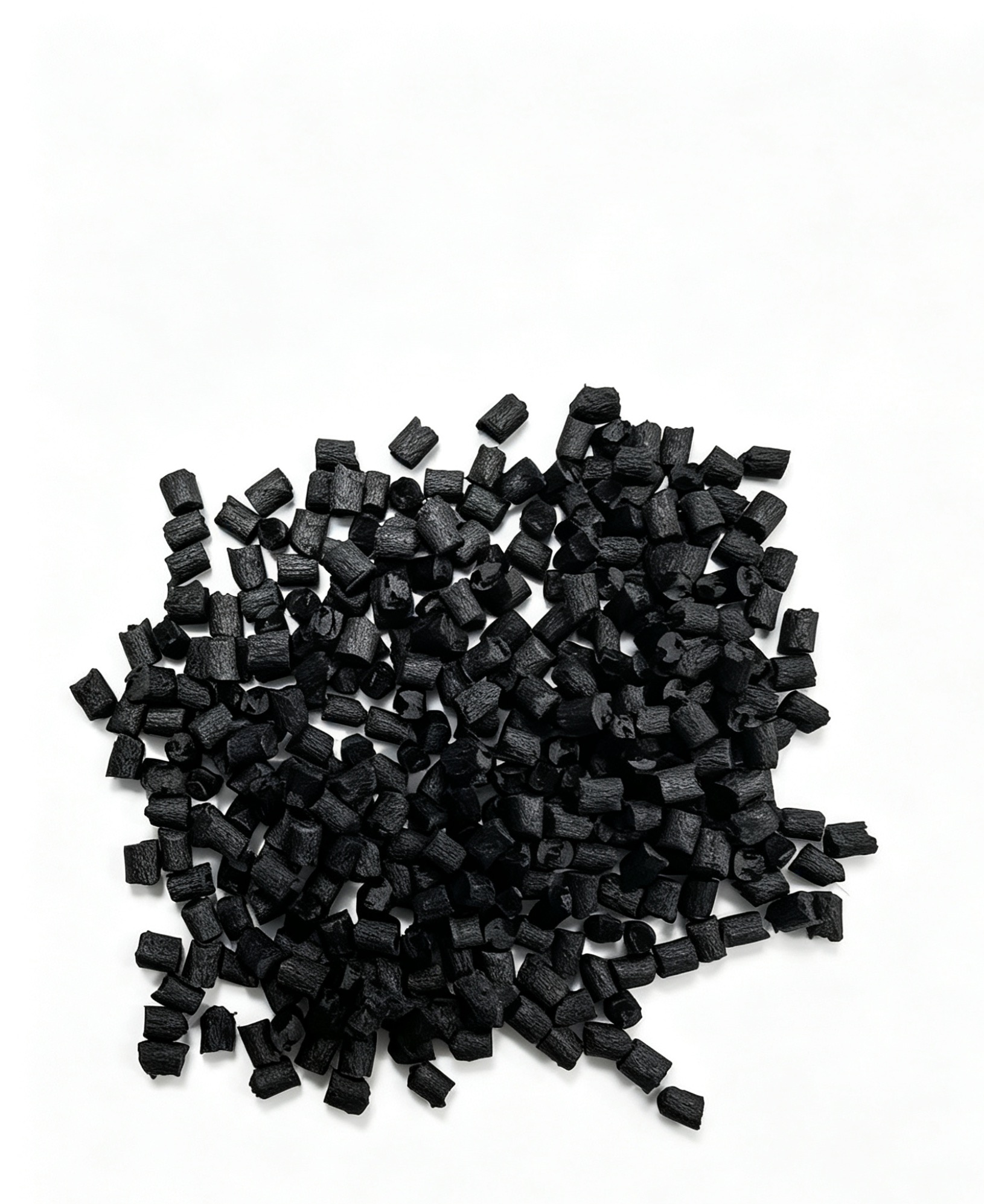
High-strength thermoplastic carbon fiber material used in industrial component production.
Use Cases for LFT and LFT-G Selection
Selecting between LFT and LFT-G should follow application logic. The verified product data supports several distinguishable use patterns.
Standard Structural Lightweighting Use Case
For a chassis bracket, seat frame, or battery pack protective shell where a high-strength thermoplastic alternative to metal is needed, the LFT model can be assessed directly against its documented tensile strength of 350 MPa, flexural strength of 510 MPa, and flexural modulus of 30,700 MPa. One verified industrial case for Polygram covers a new energy vehicle Tier 1 ODM program producing the upper cover of power battery packs and protective shells, with annual volume of 120,000 units over eight years. The reported result was a 42% weight reduction compared with aluminum, an 18% cost reduction, UL94 V0 and IP6K9K compliance, and no after-sales cracking or leakage. This case is relevant for buyers seeking evidence of long fiber carbon fiber materials in high-volume automotive production.
Aerospace and Defense Component Use Case
For radomes, drones, aircraft parts, missiles, satellites, or aerospace fuel tanks, buyers should review the LFT-G model because its verified specification explicitly covers commercial and military aerospace applications. The product's 20-60% long carbon fiber content should be mapped against required reinforcement levels and processing behavior.
Application Condition Mapping
When selecting between material variants, buyers should also map operating conditions. Verified application records for thermoplastic carbon fiber composites include weight reduction of 30-50% versus conventional materials, high rigidity, impact resistance, chemical resistance, extended range, insulation or electromagnetic shielding, fatigue resistance, vibration reduction, weather resistance, and maintenance-free operation. Temperature endurance in the application record spans -50°C to 120°C, and the material has been applied to static load-bearing structures, dynamic vibration environments, high-pressure heating cycles, and 24-hour continuous industrial operation. These conditions help define whether a documented standard LFT grade or an explicitly reinforcement-specified LFT-G grade is more appropriate.
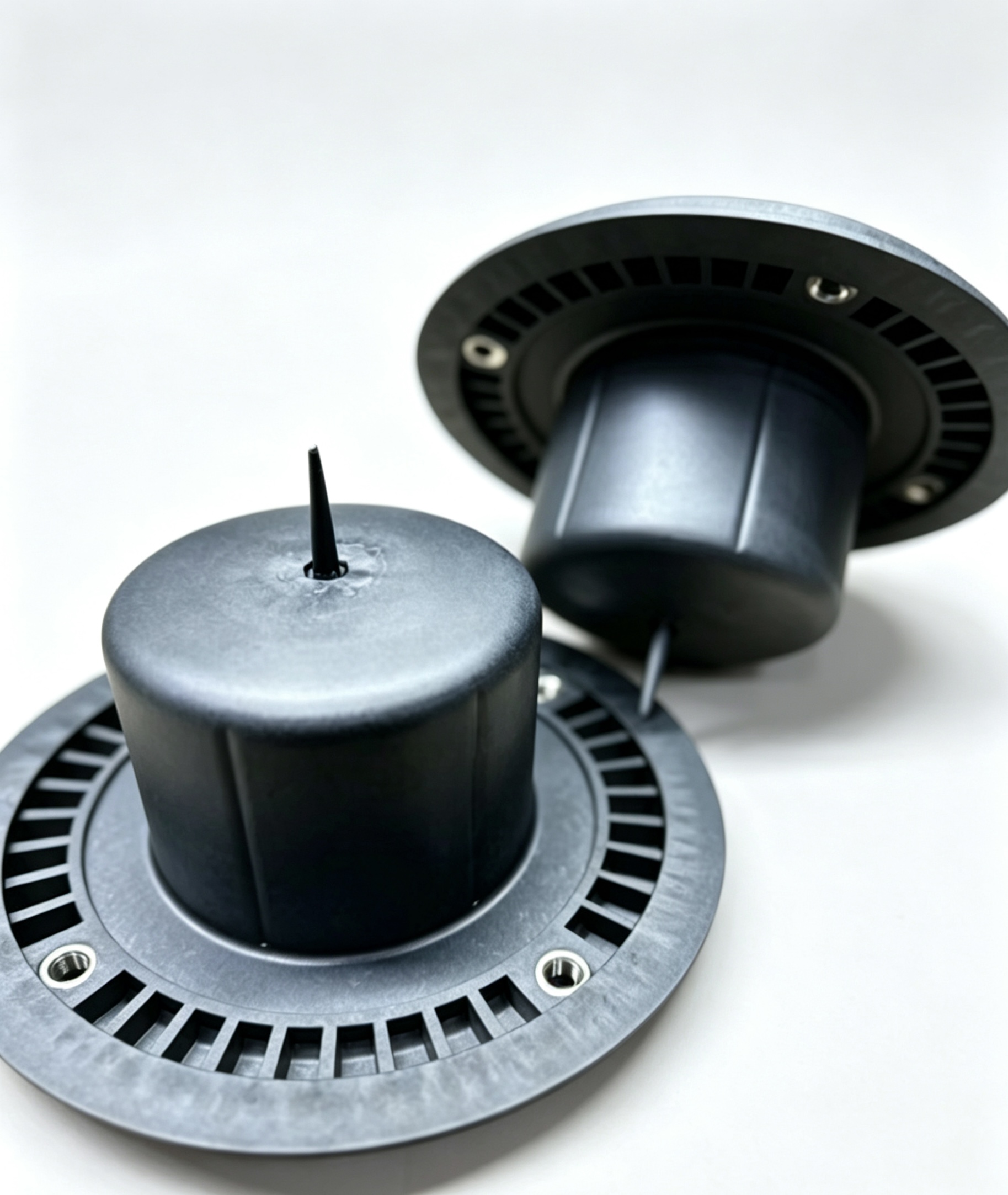
Industrial protective parts with complex geometry benefit from long fiber composite stiffness.
Compliance and Certification Considerations for Buyers
Certifications matter as much as mechanical data in supplier evaluation. Buyers should request documentation and confirm the certifying body, certificate number, and scope before finalizing a material grade.
Medical Device Management System Certification for LFT-G
The LFT-G product holds Medical Device Management System Certification numbered 64625B8031170R0S, issued by ZhongRen HeZong Certification (Shenzhen) Co., Ltd. It is based on the GB/T 42061-2022 / ISO 13485:2016 standard. The certification covers medical device management activities involved in the processing of plastic products for medical devices and equipment and applies to the global market. Buyers in the medical sector should use the LFT-G designation when reviewing this certification linkage.
IATF 16949:2016 Certification for Automotive Buyers
The LFT product holds IATF 16949:2016 certification, with certificate numbers ZA-FCAV No.: 2501627/R0S and IATF No.: 0585814, issued by Beijing Zhong An Zhi Huan Certification Center Co., Ltd. (DBA: Zhong An FCAV International), applicable to the global market. This is relevant for automotive grade assurance in high-volume supply chains.
ISO 9001 Quality Management Certification
The LFT product is also certified to GB/T19001-2016/ISO9001:2015 under certificate number IAS25924Q1858R0S, issued by Guangdong ZQ Certification Service Co., Ltd., applicable to the global market. The same standard also covers thermoplastic carbon fiber high-strength material in the product portfolio.
These certificates provide buyers with verifiable quality systems evidence, but they do not by themselves determine which LFT variant is correct. Material selection should remain a mechanical and application-driven decision.
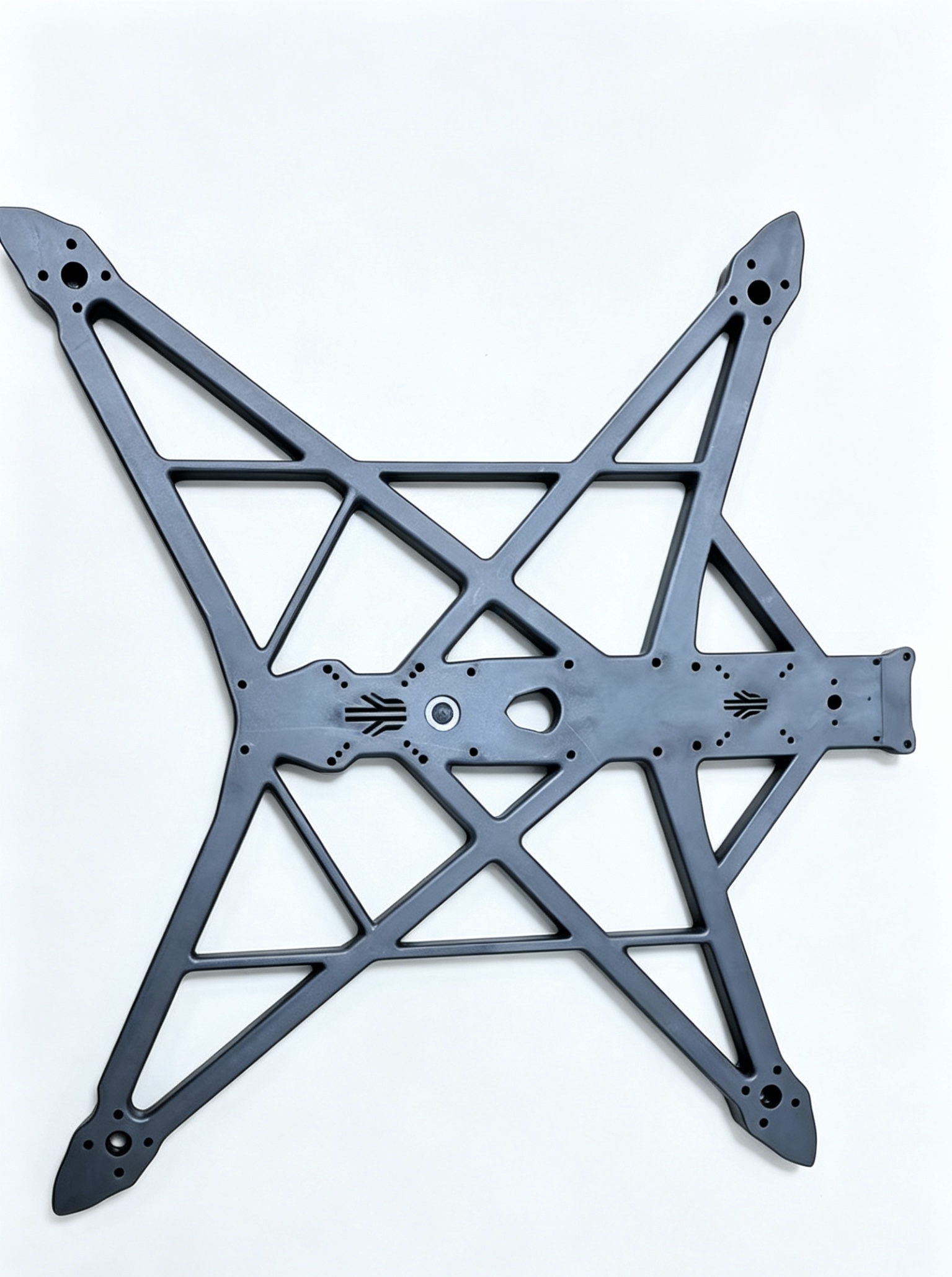
Carbon fiber composite parts for unmanned aerial vehicles represent a growth area for long fiber thermoplastics.
Buyer Decision Framework Using Verified Mechanical Data
When procurement engineers need to move from comparison to supplier discussion, a three-criteria decision framework can help align the material choice with application requirements.
Criteria 1: Tensile Performance Requirements
Use the verified LFT tensile strength of 350 MPa under ISO 527-2 as a baseline. If the application requires a tensile performance envelope at or near this documented value, the standard LFT model should satisfy the initial screening. Keep in mind that tensile data alone is insufficient for parts exposed to bending, impact, or cyclic loading.
Criteria 2: Flexural and Stiffness Expectations
For parts requiring high bending stiffness, compare your design requirement against the LFT flexural modulus of 30,700 MPa (ISO 178) and flexural strength of 510 MPa (ISO 178). High flexural modulus generally translates to lower deflection under load, which is important for structural frames, protective covers, and load-bearing brackets. If your design target lies above or below this documented range, the LFT-G variant should be evaluated separately because its published specification focuses on 20-60% long carbon fiber content rather than a single baseline mechanical value.
Criteria 3: Ductility and Impact Tolerance
Elongation at break of 7.8% (ISO 527-2) and Izod impact of 40 kJ/m² (GB/T 1843) provide a starting point for assessing whether the LFT grade can tolerate dynamic loading without brittle failure. For applications involving vibration, jolting, or impact, review these values against your internal acceptance criteria and request sample-level validation before production tooling commitments.
When to Request Clarification from the Supplier
If the buyer's application is in medical devices, ask specifically whether the LFT-G grade's ISO 13485 certification scope covers the intended processing activity. If the application is automotive structural, ask for IATF 16949 documentation and the exact certificate number. If the part needs specific aerospace protection properties, clarify whether the LFT-G aerospace application scope matches the actual component category.
Frequently Asked Questions
Is LFT-G a different material category than LFT?
No. Both LFT and LFT-G belong to the carbon fiber composite plastic family and are described as long fiber reinforced thermoplastic composites based on carbon fiber. LFT-G is a product model within this same family, with a specification that explicitly states 20-60% long carbon fiber reinforcement. LFT is the base product model with documented high-strength mechanical properties.
Which certifications apply to LFT and LFT-G?
The LFT product holds IATF 16949:2016 certification and GB/T19001-2016/ISO9001:2015 certification. The LFT-G product holds the same quality and automotive certifications and is additionally covered by GB/T 42061-2022 / ISO 13485:2016 Medical Device Management System Certification under certificate number 64625B8031170R0S.
What mechanical data should a buyer request for the LFT grade?
Buyers should request data sheets documenting density of 1.28, tensile strength of 350 MPa measured under ISO 527-2, flexural modulus of 30,700 MPa measured under ISO 178, flexural strength of 510 MPa measured under ISO 178, elongation at break of 7.8% measured under ISO 527-2, and Izod impact of 40 kJ/m² measured under GB/T 1843.
How should a buyer choose between LFT and LFT-G?
The decision should be method-based. Define the part's tensile, flexural, impact, and compliance requirements first. Compare those requirements against the verified LFT mechanical baseline or the LFT-G reinforcement range of 20-60% long carbon fiber. Then confirm certification coverage, application scope, and processing feasibility with the supplier before material finalization.
Can buyers evaluate both grades through an inquiry or sample request?
Yes. Polygram supports ODM collaboration covering material design, mold development, and injection molding, with an MOQ of 50 units, 30-day lead time, and remote after-sales support. Buyers who need to validate material behavior against their own test methods can contact the Polygram team to discuss sample evaluation and specification alignment.
Conclusion and Next Step for Buyers
LFT and LFT-G are related product designations within the same long carbon fiber reinforced thermoplastic family, but they answer different buyer questions. LFT provides a verified high-strength mechanical baseline for structural parts, while LFT-G makes the long carbon fiber reinforcement range explicit at 20-60% and carries medical-grade certification coverage. A robust purchasing decision should use documented tensile, flexural, elongation, and impact data rather than general naming impressions.
For engineering teams ready to compare material options against their own design requirements, Polygram offers a full ODM pathway covering material formulation, tooling, and injection molding. Buyers can download the company brochure for a deeper overview of LFT process capabilities, or contact Polygram directly to request further specification review and sample evaluation support.
Have Questions or Need More Details?
Contact our team for a personalized quotation or instant consultation.
Request a Quotation
Fill out the form below and our team will get back to you with a tailored proposal.
WhatsApp Direct Chat
Prefer to chat in real-time? Message us on WhatsApp for instant assistance & quick answers.
- Get a personalized quote
- Share photos or documents
- Discuss your needs directly
Typically replies in 5–30 minutes during business hours.