
Mechanical Selection Parameters for Thermoplastic Long Carbon Fiber Composites: An Engineering Guide for High-Strength Components
Six mechanical parameters decide whether a thermoplastic long carbon fiber composite belongs in a high-strength structural component: tensile strength, flexural strength, flexural modulus, Izod impact strength, elongation at break, and density. In the LFT carbon fiber composite plastic referenced throughout this guide, those values are 350 MPa (ISO 527-2), 510 MPa (ISO 178), 30,700 MPa, 40 kJ/m², 7.8%, and 1.28 g/cm³ respectively. Taken together they describe a material that is rigid, strong in bending, tolerant of impact loading, and light enough for weight-driven programmes in robotics, aerospace, and new energy vehicles.
What follows is an engineering interpretation rather than a copy of a datasheet. Each parameter is explained in terms of what it actually measures, how to read the number, what it implies for wall thickness, ribbing and deflection, and where the number stops being reliable. The last section explains why these six values should be treated as a long-term supply commitment rather than a one-time specification on a purchase order.
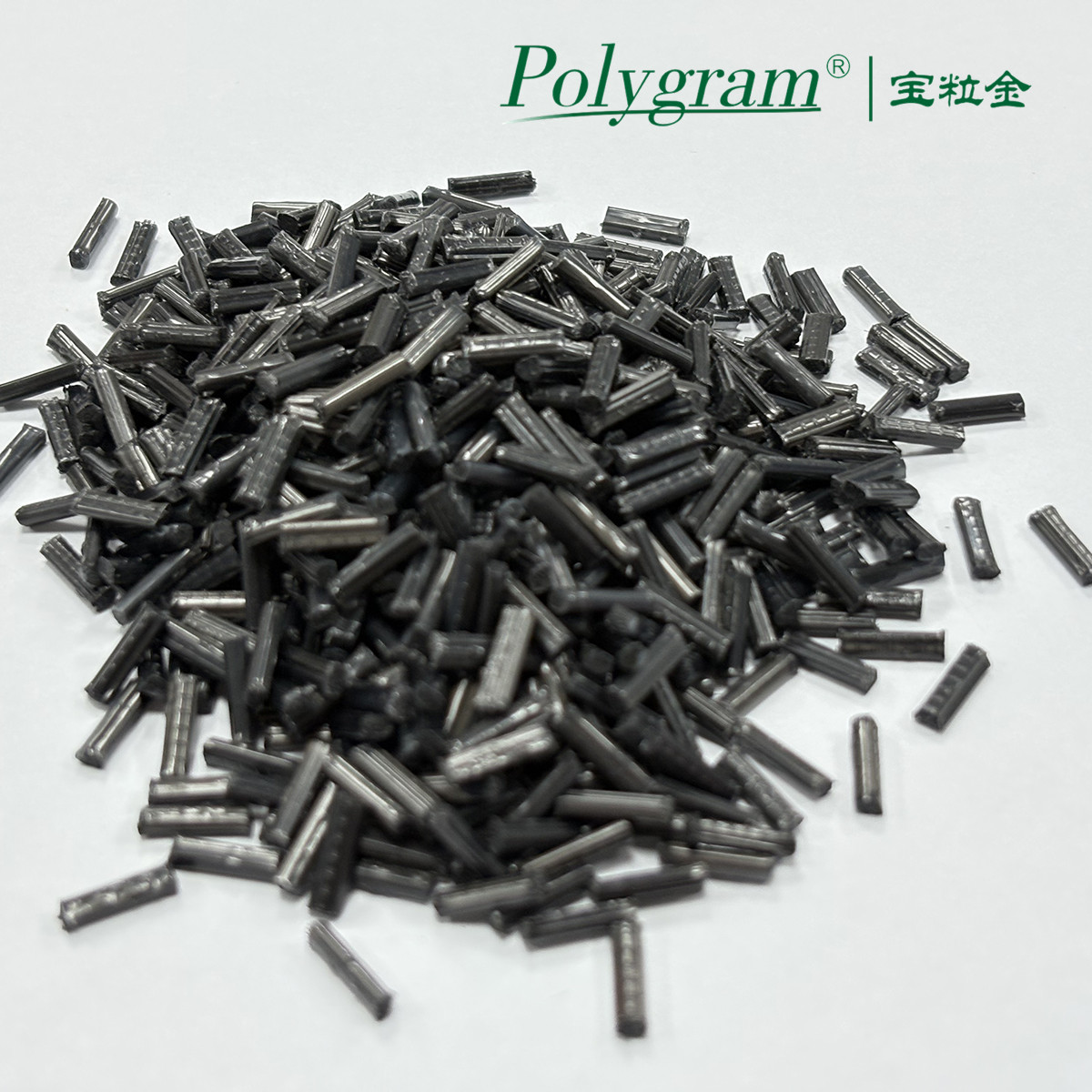
What LFT Means Before the Numbers Mean Anything
LFT stands for long fiber reinforced thermoplastic. The distinguishing feature is fiber length: in short fiber reinforced thermoplastics the fibers are typically under 12 mm, while the LFT process produces fibers in the range of 5–25 mm. Those long fibers are impregnated with resin through a dedicated mould system to form long strips that are fully wetted out, then cut to the length required for the downstream process. The most widely used base resin is PP, followed by PA6, PA66, PA6/PA12, MXD6, PBT, PET, TPU, PPS, LCP and PEEK. Conventional reinforcement fibres include glass fiber and carbon fiber; basalt fiber and quartz fiber cover special requirements. Depending on the end use, the finished compound is processed by injection moulding, extrusion or compression moulding, or used directly as a replacement for steel and thermoset parts.
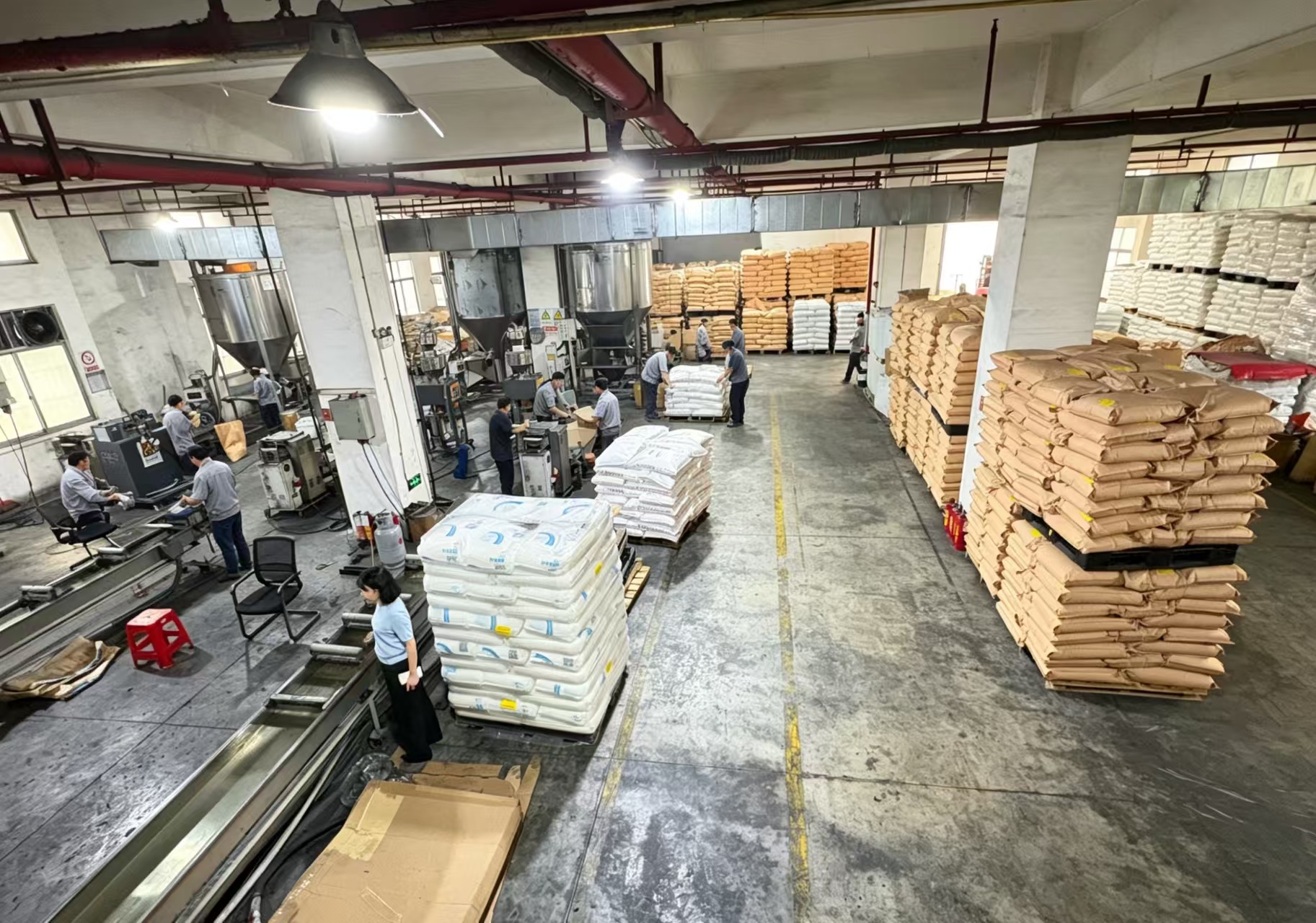
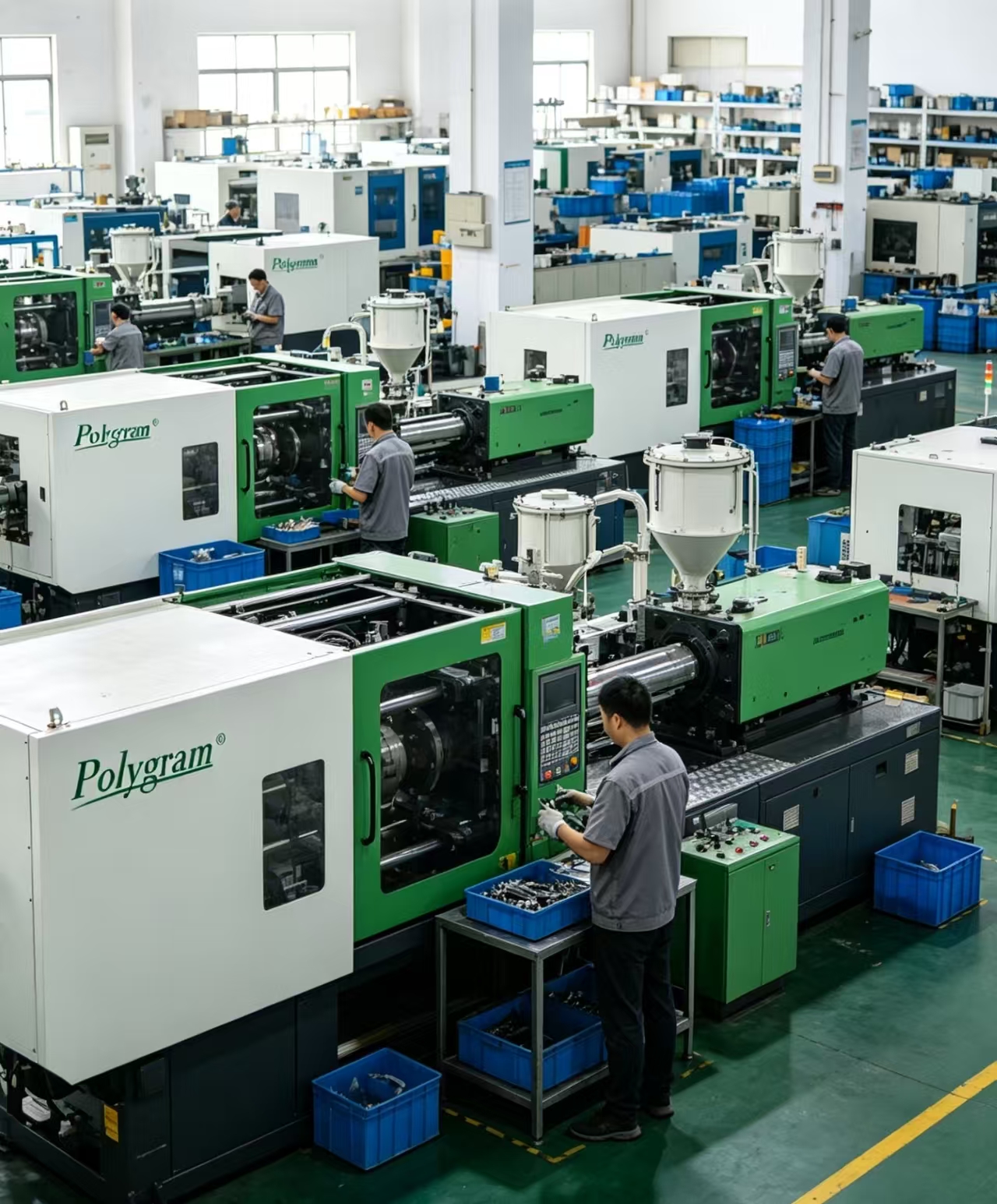
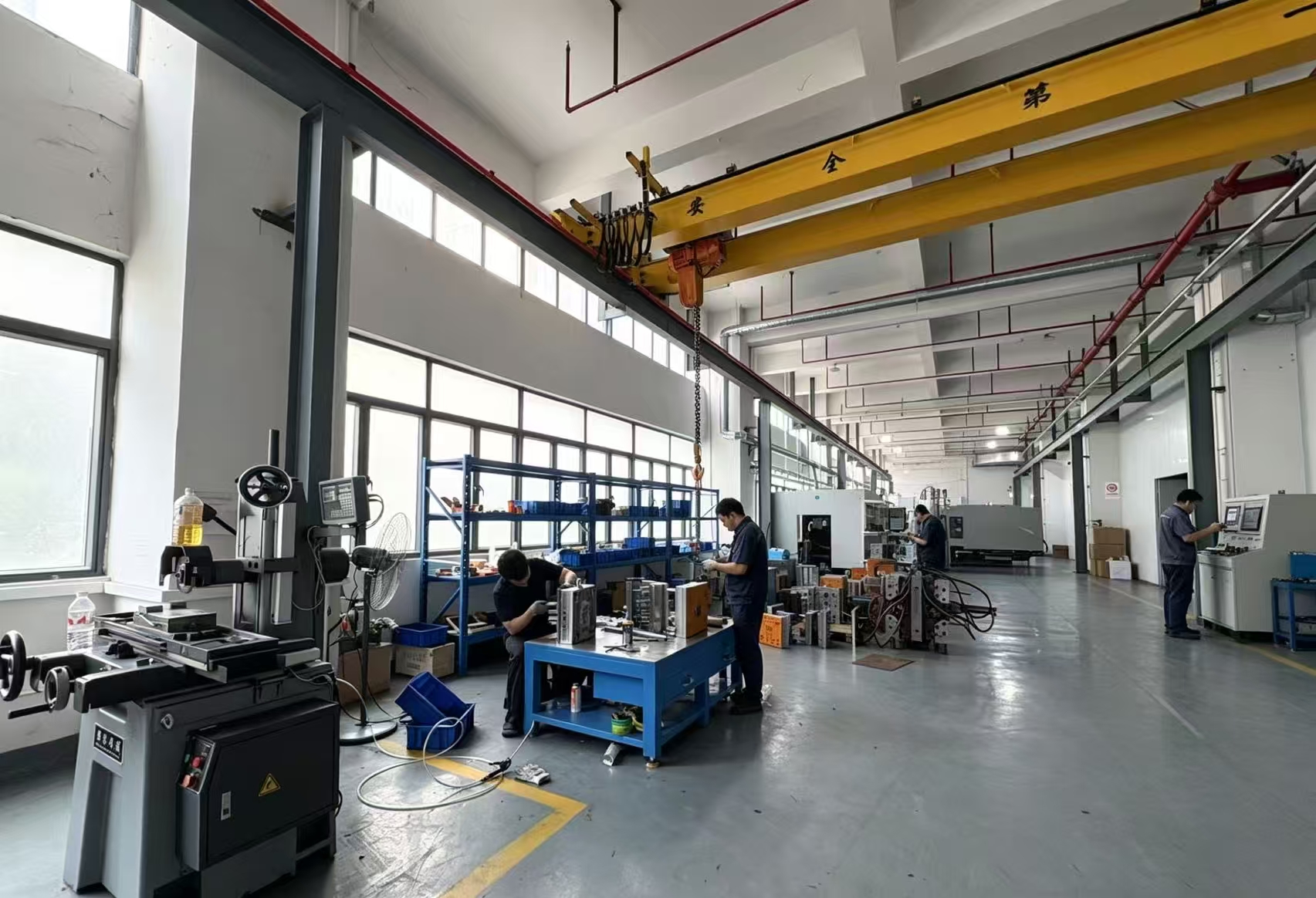
Polygram (Guangdong Baolijin New Material Technology Co., Ltd.), based in Dongguan, Guangdong Province, China, is a manufacturer of thermoplastic LFT carbon fiber composites, conductive and antistatic plastics, and graphene thermally conductive plastics, and supplies these materials together with mould development and injection moulding services. The company was established in 2017 and operates a 4,000 m² facility with a 10-engineer R&D team, exporting approximately 30% of its output to Europe, America and Southeast Asia.
Fiber length is the reason the parameter set in this article looks different from a short fiber or a metal datasheet. Long fibers bridge across a loaded section rather than terminating within it, so the reported tensile, flexural and impact values describe a material that behaves more like a continuous reinforcement than a filled plastic. That is also why the mechanical numbers cannot be read in isolation from the fibre loading, the base resin, and the test method behind them.
The Problem: Composite Datasheets Are Read Too Quickly
Most material selection errors on structural programmes do not come from a wrong material. They come from a correctly reported number being interpreted incorrectly. Four failure patterns repeat across engineering reviews:
- Reading the value without the test method. A tensile figure produced under one specimen geometry and test speed is not interchangeable with a figure produced under another. ISO 527-2 tensile data and ISO 178 flexural data answer different questions and must not be substituted for one another.
- Treating specimen data as part performance. Test specimens have a controlled fibre orientation. An injection-moulded structural part has weld lines, gate regions and flow-induced orientation, so local performance varies across the same component. The datasheet value is the starting point of the calculation, not the result.
- Choosing on strength alone. A part that never fractures but deflects beyond its tolerance is a failed design. Stiffness, captured by flexural modulus, is frequently the binding constraint in robotic links and precision brackets.
- Deferring density and elongation. Density is treated as a packaging detail until the lightweighting target is missed, and elongation is ignored until a snap fit cracks during assembly.
The practical consequence is a selection process that produces a defensible choice on paper and an unplanned redesign six months into production. The parameter-by-parameter interpretation below is designed to prevent that.
Industry Background: Why LFT Parameters Are Being Read More Carefully
The broader carbon fiber reinforced plastic market was estimated at USD 19.27 billion in 2024 (Grand View Research). Within that market, the long fiber thermoplastics segment is projected to grow from USD 2.58 billion in 2025 to USD 4.06 billion by 2031 (MarketsandMarkets). Growth of that scale in a reinforcement class that is bought on mechanical parameters means more engineers, not fewer, are being asked to interpret LFT data sheets for the first time.
The supply side of the carbon fiber chain is dominated by a small group of established international producers, including Toray Industries, Solvay, Hexcel Corporation, Teijin Limited and Mitsubishi Chemical. Compounders and moulders sit downstream of that chain and convert fibre and resin into mouldable LFT grades. On the test side, ISO 527-4/5 and ASTM D4018 are established standard methods for carbon fiber tensile properties, and ISO 527-2 and ISO 178 are the reference methods for the compounded thermoplastic properties discussed here.
Three application categories are pulling the interpretation question forward: robotics, where stiffness-to-mass ratio drives cycle time; aerospace, where every kilogram removed propagates through the rest of the structure; and new energy vehicles, where battery pack and structural components are being converted from metal to composite at production volumes high enough that batch consistency matters as much as the nominal value.
The Six Parameters, Interpreted for Design
1. Tensile Strength — 350 MPa (ISO 527-2)
Tensile strength is the maximum stress a standard specimen withstands while being pulled apart under ISO 527-2. At 350 MPa, the grade sits in the range expected of a long carbon fiber reinforced thermoplastic rather than a short fiber compound. The design question it answers is direct: how much load can a section carry in tension before it fails?
For a tie rod, a bracket arm or a robot link subjected primarily to tensile load, the value sets the minimum cross-section once the safety factor is applied. The important qualification is orientation. Fibres aligned with the load path contribute close to their full capability; fibres perpendicular to it contribute far less. In a moulded part, the flow pattern determines which of those two situations applies at each location, which is why a tensile number should always be confirmed on a moulded sample of the actual geometry before it is locked into a design calculation.
2. Flexural Strength — 510 MPa (ISO 178)
Flexural strength describes resistance to bending failure and is measured under ISO 178. The reported 510 MPa is higher than the tensile value, which is normal for this test geometry: the specimen is loaded over a short span so the outer fibres carry the peak stress while the core is supported, and the measured number reflects that combined stress state.
Most structural parts in robotics, aerospace brackets and vehicle components are bending-critical rather than tension-critical, which makes the flexural figure the more representative strength indicator for those applications. It is the correct value to use when sizing ribs, levers, cantilever brackets and snap features. It is the wrong value to use as a substitute for tensile strength in a pure tension calculation.
3. Flexural Modulus — 30,700 MPa
Flexural modulus is stiffness. At 30,700 MPa (approximately 30.7 GPa), the material belongs to the high-rigidity end of long carbon fiber thermoplastic grades. Stiffness governs deflection, natural frequency, buckling resistance and dimensional stability under load — the properties that decide whether a part is functionally acceptable even when it is nowhere near its failure stress.
This is the parameter most often under-weighted. A robotic arm link that deflects a few tenths of a millimetre more than its control model assumes will degrade positional repeatability across every cycle for the life of the machine. When a stiffness target drives the design, the selection conversation should start with flexural modulus, and strength should be verified afterwards rather than the other way round.
4. Izod Impact Strength — 40 kJ/m²
Izod impact strength measures the energy a specimen absorbs under a sudden blow. It matters wherever a component can be struck, dropped, or exposed to repeated shock: end-effectors in robotics, underbody and pack-adjacent parts in vehicles, and handling equipment in production. A value of 40 kJ/m² indicates a material that absorbs impact energy rather than fracturing in a brittle manner.
Long fibers contribute to this behaviour because they bridge across an advancing crack, which is also why Polygram's comparison data for LFT grades reports 2–5× longer fatigue life and 30% higher impact toughness relative to short fiber reinforced alternatives. Impact performance is highly geometry-sensitive: sharp internal corners and abrupt section changes concentrate stress and can cause a part to fail well below the material's nominal impact value. Blend radii and gradual thickness transitions are part of impact design, not cosmetic detail.
5. Elongation at Break — 7.8%
Elongation at break is the strain the material reaches before fracture, measured in the same tensile test that produces the strength value. 7.8% places the grade well above brittle reinforced plastics. Two design consequences follow.
First, the material distributes stress around notches, holes and inserts instead of cracking at the first stress concentration. Second, features that depend on controlled deformation — snap fits, press fits, clip retention, assembly tolerances — become designable. A high-strength material with very low elongation would satisfy a strength calculation and still fail in assembly, which is why elongation belongs in the selection table from the beginning rather than being checked at the end.
6. Density — 1.28 g/cm³
Density converts a design into a mass: component mass equals volume multiplied by density. At 1.28 g/cm³, the material is reported in Polygram's comparison data as approximately 50% lower in density than aluminum alloy, with a corresponding lightweighting effect on finished parts. That is the arithmetic behind weight-reduction programmes in electric vehicles, unmanned aerial platforms and robotics, where reduced moving mass improves energy efficiency and, in the case of robot links, lowers the inertia that the actuator has to control.
Density also compounds. A lighter link requires less actuator torque, which allows a smaller actuator, which removes further mass. Weight-sensitive programmes should therefore evaluate density alongside stiffness rather than as a standalone figure.
| Parameter | Reported Value | Test Reference | Primary Design Question |
|---|---|---|---|
| Tensile strength | 350 MPa | ISO 527-2 | Can the section carry the tensile load? |
| Flexural strength | 510 MPa | ISO 178 | Will it survive bending without fracture? |
| Flexural modulus | 30,700 MPa | ISO 178 | How much will it deflect under load? |
| Izod impact strength | 40 kJ/m² | Izod impact method | Will it absorb shock without cracking? |
| Elongation at break | 7.8% | ISO 527-2 tensile test | How much deformation before failure? |
| Density | 1.28 g/cm³ | Physical property | What will the finished part weigh? |
How 20–60% Long Carbon Fiber Loading Shifts These Numbers
LFT carbon fiber grades are specified across a reinforcement range of roughly 20% to 60% long carbon fiber by weight. Loading is the single largest lever on the mechanical values discussed above, and it moves them in different directions.
- Strength and stiffness rise with loading. Higher fibre content increases both tensile and flexural performance and lifts flexural modulus, which is how a high-rigidity grade is achieved.
- Impact and elongation do not rise in step. Increasing fibre content progressively constrains the matrix, so ductility and impact behaviour must be re-verified at each loading level rather than assumed.
- Processability changes. Higher loading raises melt viscosity, which affects flow length, weld-line quality and achievable wall thickness in thin sections.
The engineering rule is straightforward: a mechanical value is only meaningful when paired with the fibre loading and base resin it was measured at. When a datasheet is compared against a competing grade, the first question is not which number is higher but whether both numbers describe the same loading level, the same base resin and the same test method. For a part where stiffness is the binding constraint, a higher loading level may be the correct route; for a part where impact or assembly strain governs, a mid-range loading with higher elongation may perform better in service despite lower modulus.
Step-by-Step: A Parameter-Led Selection Workflow
- Define the governing load case and failure mode. Decide whether the part is limited by tension, bending strength, deflection, impact, or assembly strain. This determines which of the six parameters is the binding one.
- Map each requirement to a specific parameter. Tensile strength for tension-critical sections; flexural strength for bending; flexural modulus for deflection and stability; Izod impact for shock; elongation at break for assembly and notch tolerance; density for mass budget.
- Set a target window, not a single number. Specify acceptable minimum and maximum values so the material has room to move within specification without triggering a design change.
- Select the fibre loading and base resin that can deliver the window. Check the 20–60% long carbon fiber range and confirm which loading level the quoted data refers to.
- Verify the test method behind every number. Confirm ISO 527-2 for tensile, ISO 178 for flexural, and the corresponding impact method, so that incoming data is genuinely comparable.
- Validate on moulded samples in the real geometry. Flow-induced fibre orientation and weld lines change local performance; specimen data alone is not a validation.
- Write the parameter window into the supply agreement. Define the batch inspection and retention regime so the validated parameters continue to apply in serial production.
Application Interpretation: Robotics, Aerospace and New Energy Vehicles
Robotics
In robotics, the binding parameters are usually flexural modulus and density rather than tensile strength. A 30,700 MPa flexural modulus supports stiff link and arm structures, while a 1.28 g/cm³ density reduces the moving mass that the drive system has to accelerate and stop. Izod impact strength of 40 kJ/m² covers the collision and handling events that occur in real production environments, where a brittle structural member would be an operational risk rather than a performance issue.
Aerospace
Aerospace brackets, housings and internal structural parts are weight-driven, so density and stiffness dominate the trade study. Polygram's LFT comparison data reports a 30–50% weight advantage versus metal and 2–5× longer fatigue life, both of which are directly relevant to components that see repeated load cycles. Thermal compatibility also matters where composite parts interface with metallic structure: a project quoted in Polygram's press data used a long carbon fiber grade with integrated injection moulding and a coefficient of thermal expansion of 28 ppm/°C, compatible with aluminum, in high-speed mass production for new energy vehicle Tier 1 (ODM) clients at an annual production scale of 120,000 units.
New Energy Vehicles
Vehicle programmes combine the whole parameter set. A power battery pack component project in Polygram's customer-facing records achieved a 42% weight reduction and an 18% cost reduction compared with aluminum, complies with UL94 V0 and IP6K9K, and has shown no after-sales cracking or leakage. The project has run from 2018 to 2026 with an annual production of 120,000 units — a clear illustration of the point that mechanical parameters have to hold not just at sample approval but across an extended production period.
Medical and Other Special Scenarios
LFT grades are also used in special medical scenarios and in high-strength, puncture-resistant and impact-resistant products, where the same combination of stiffness, impact tolerance and low mass applies. Where a component must also manage static or electromagnetic behaviour, Polygram's material portfolio covers conductive and antistatic plastics and electromagnetic shielding composite plastics alongside the structural LFT range; the electromagnetic shielding composites market was valued at USD 1.97 billion in 2024, with a projected CAGR of 7.1% through 2033.
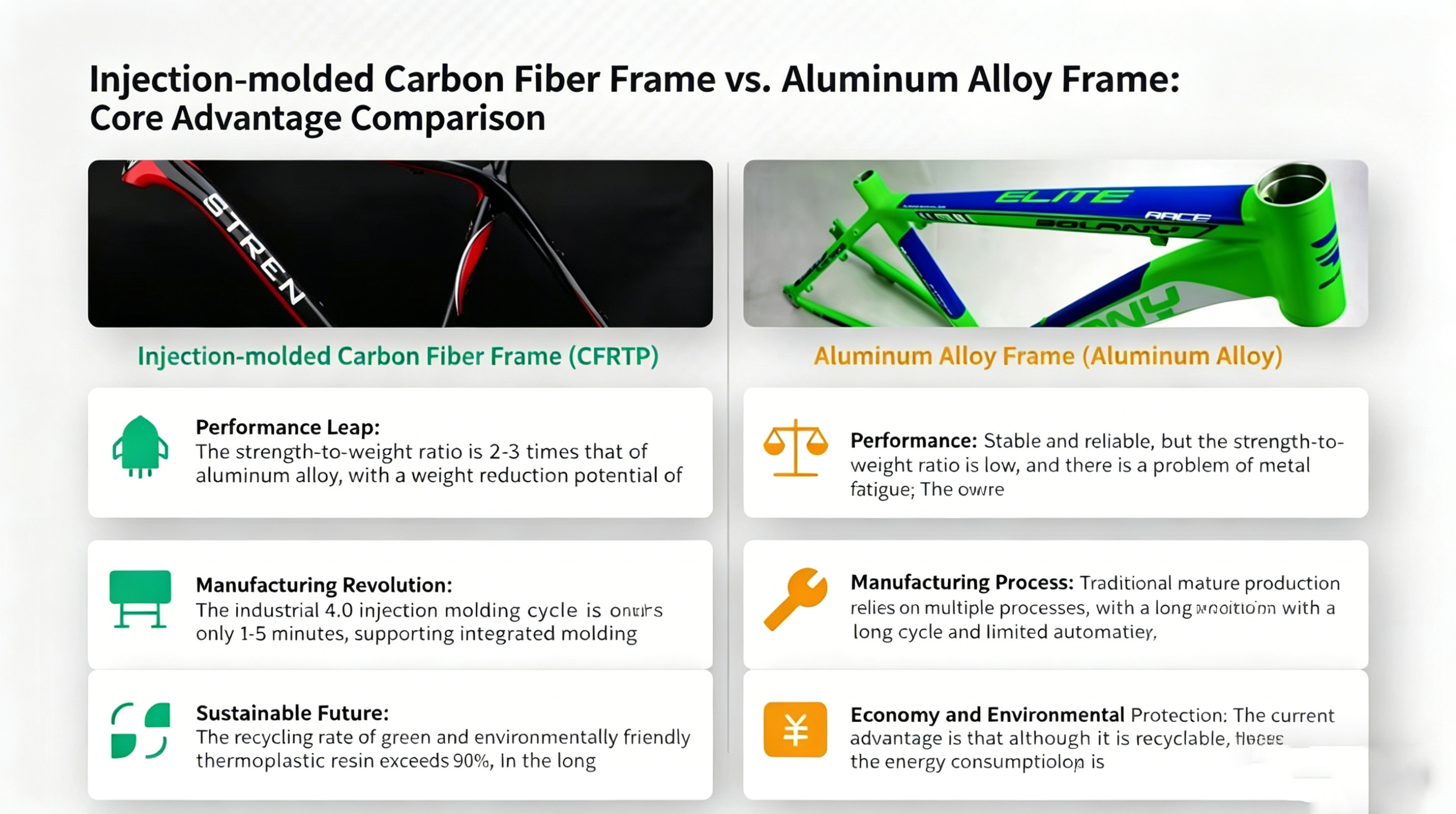
Comparison Table: LFT Carbon Fiber Composite Plastic vs. Aluminum Alloy vs. Short Fiber Reinforced Thermoplastic
| Comparison Point | LFT Carbon Fiber Composite Plastic | Aluminum Alloy | Short Fiber Reinforced Thermoplastic (SCF/GF) |
|---|---|---|---|
| Reinforcement length | Long fiber, 5–25 mm | Not applicable to this comparison | Short fiber, under 12 mm |
| Density / weight position | Approximately 50% lower in density than aluminum alloy, with an outstanding lightweighting effect | Reference point in this comparison | No figure specified in this fact base |
| Tensile performance position | Reported 20–40% higher tensile strength than SCF/GF | Not applicable to this comparison | Baseline in this data set |
| Fatigue life | Reported 2–5× longer fatigue life | Not applicable to this comparison | Baseline in this data set |
| Impact toughness | Reported 30% higher impact toughness than SCF/GF | Not applicable to this comparison | Baseline in this data set |
| Corrosion and maintenance | Corrosion-free, no anti-rust treatment required, lower vibration and noise, minimal maintenance | Not specified in this fact base | Not specified in this fact base |
| Forming capability | One-piece injection moulding of complex, irregular shapes with good consistency | Not applicable to this comparison | Not specified in this fact base |
| Cost position | Slightly higher raw material cost than SCF/GF, but lower total cost through reduced processing, assembly and maintenance | Not specified in this fact base | Lower raw material cost than LFT |
Parameter Stability Is a Long-Term Supply Question
A validated parameter is only an achievement if it repeats. On a structural programme that runs for years, the mechanical values discussed above have to be maintained across every batch, every tool and every production year — otherwise the design calculations that were signed off at the start quietly stop describing the parts being delivered.
This is a supply-chain problem as much as a materials problem, and it is where long-term supplier relationships earn their value. Polygram's quality-control regime for carbon fiber injection moulding materials is built around batch full inspection plus retention of key parameter samples covering strength, modulus, flame retardancy and shrinkage rate, supported by a full product life-cycle traceability system that follows material from raw material through production and export to the customer. Certification coverage includes UL94 V0, RoHS, REACH, ISO 9001 and ISO 14001, with CE, FDA and ASTM requirements applied for products exported to the European Union and North America.
Delivery reliability follows the same logic. Polygram's documented capacity is 12,000,000 units per month with a typical production lead time of 30 days, and the company also provides customization and ODM services covering material design, raw material production, mould development and injection moulding. One project in the company's records has been implemented over a duration of 8 years, from 2018 to 2026 — a period long enough that parameter drift, if it occurred, would be visible in the field rather than only in the laboratory.
For engineers writing a specification, the implication is practical: the six parameters belong in the supply agreement alongside the commercial terms, and the batch inspection and traceability regime is the mechanism that keeps them true.
FAQ
What test standards and compliance documents should accompany an LFT carbon fiber composite plastic datasheet?
Tensile data should be reported under ISO 527-2 and flexural data under ISO 178, which are the standard methods behind the 350 MPa tensile and 510 MPa flexural values used in this guide. On the compliance side, carbon fiber injection moulding materials from Polygram are standard-equipped with UL94 V0, RoHS, REACH, ISO 9001 and ISO 14001 certifications, and products exported to the European Union or North America are subject to mandatory certifications such as CE, FDA and ASTM in the target countries. Buyers should also request the batch inspection record and retention sample data covering strength, modulus, flame retardancy and shrinkage rate.
Can the mechanical parameters be adjusted for a specific structural part?
Yes. LFT grades are specified across a 20–60% long carbon fiber loading range, and the base resin can be selected from PP, PA6, PA66, PA6/PA12, MXD6, PBT, PET, TPU, PPS, LCP or PEEK depending on the temperature, chemical and structural requirements of the application. Polygram provides customization and ODM services with a one-stop process covering material design, raw material production, mould development and injection moulding, which allows the parameter window — strength, stiffness, impact and density — to be tailored to a defined part rather than selected from a fixed catalogue.
Is LFT carbon fiber composite plastic more expensive than short fiber reinforced plastic?
Raw material cost is slightly higher than for short fiber reinforced plastic, but the total cost position is reported as lower once reduced processing, assembly and maintenance are taken into account. The comparison data also records a lower total cost against metal alternatives, and a power battery pack component project achieved an 18% cost reduction compared with aluminum alongside a 42% weight reduction. Commercial terms are MOQ 200 units, delivery terms negotiated with the customer, pre-shipment random inspection as the acceptance criterion, and full payment.
How can we validate the mechanical parameters before committing to production?
Validation starts with sample parts moulded in the actual geometry, because fibre orientation and weld lines change local mechanical behaviour relative to a standard test specimen. Compare the sample test results against the specified parameter window, then confirm the acceptance route. Polygram's acceptance criterion for shipments is pre-shipment random inspection, supported by batch full inspection and retention of key parameter samples for strength, modulus, flame retardancy and shrinkage rate, plus a full life-cycle traceability system from raw material to customer delivery.
What lead time and long-term supply assurance can be expected?
The documented monthly production capacity is 12,000,000 units with a typical production lead time of 30 days, and Polygram also provides customization and ODM support for programme-specific requirements. For long-life programmes, the reference point is a project implemented over 8 years, from 2018 to 2026, with an annual production of 120,000 units and no after-sales cracking or leakage reported — evidence that parameter consistency can be maintained over an extended production period. If you are evaluating a structural component, you can request a material sample and a quotation against your parameter window through www.carbolft.com, or review the full material portfolio in the Polygram product brochure.
Conclusion
The six parameters reviewed here — 350 MPa tensile strength (ISO 527-2), 510 MPa flexural strength (ISO 178), 30,700 MPa flexural modulus, 40 kJ/m² Izod impact strength, 7.8% elongation at break and 1.28 g/cm³ density — describe a long fiber thermoplastic carbon fiber composite plastic suited to high-strength structural components in robotics, aerospace and new energy vehicles. Read individually they are datasheet values; read together, and checked against the 20–60% fibre loading range and the test method behind each number, they become a usable material selection framework.
The part of the framework that is most often overlooked is duration. Parameters that hold at sample approval but drift in serial production invalidate the design work they were meant to support, which is why batch inspection, retention samples, traceability and a supplier able to sustain the same specification over years belong in the selection criteria alongside the mechanical values themselves.

Next step: send your part geometry, governing load case and target parameter window to Polygram (Guangdong Baolijin New Material Technology Co., Ltd.) to request a material sample or a quotation: www.carbolft.com | Email: baolijin@carbolft.com | WhatsApp: +86 18664191149 | Brochure: download the Polygram product catalogue.
Have Questions or Need More Details?
Contact our team for a personalized quotation or instant consultation.
Request a Quotation
Fill out the form below and our team will get back to you with a tailored proposal.
WhatsApp Direct Chat
Prefer to chat in real-time? Message us on WhatsApp for instant assistance & quick answers.
- Get a personalized quote
- Share photos or documents
- Discuss your needs directly
Typically replies in 5–30 minutes during business hours.