
LFT vs. LFT-G: A Plain-English Explainer of Carbon Fiber Composite Plastic Grades
Two short labels, one material family — and a surprising amount of avoidable confusion between them. LFT and LFT-G both sit in the same corner of the plastics industry: long fiber reinforced thermoplastic composites, in which reinforcing fibers measuring 5–25 mm are impregnated with resin and cut into molding-ready pellets.
The difference between the two designations is a difference of naming layers, not of competing technologies. Once a buyer can separate the layers, quotations, datasheets and test reports stop contradicting one another.
The short answer. LFT names the material family and the process: long fiber reinforced thermoplastic. LCF and LGF name which fiber is doing the reinforcing — long carbon fiber or long glass fiber. LFT-G is the specific catalogue designation used by Polygram (Guangdong Baolijin New Material Technology Co., Ltd.) for its long carbon fiber reinforced composite grade, specified as being made of 20–60% long carbon fiber. A quotation that says only “LFT” leaves two of those three layers unspecified.

Why the Shorthand Gets Confused
Naming in long fiber composites borrows from three vocabularies at once. LFT comes from the process side. LCF and LGF come from the reinforcement side. A code such as LFT-G comes from the supplier's own catalogue side. Mixing them in a quotation or a comparison sheet produces three recurring errors.
- Comparing unlike materials. A long fiber compound datasheet describes a pellet-form material intended for injection molding, extrusion or molding. A laminate or prepreg datasheet describes something else entirely. Numbers taken from one cannot be used to judge the other.
- Reading the fiber type from the suffix. A trailing letter in a grade code does not reliably tell a buyer which fiber is inside. In this case the record is explicit: LFT-G is documented as a long carbon fiber reinforced composite, with the loading range stated as 20–60% long carbon fiber — not a glass fiber grade.
- Transferring values between grades. Reported mechanical values belong to the grade, the test standard and the specimen conditions under which they were measured. They do not automatically carry across from one catalogue item to another.
For a procurement team, the practical cost of this confusion is time: wrong shortlists, incomparable bids and repeated requests for the same test documentation.
Industry Background: Where Long Fiber Thermoplastic Sits
The commercial context explains why the naming matters beyond semantics. Grand View Research reports the global carbon fiber reinforced plastic market at USD 19.3 billion in 2024, projected to grow from USD 23.8 billion in 2026 to USD 43.7 billion by 2033. Automotive was the largest application segment in that market, at a 34.7% revenue share in 2025. Stratview Research separately projects the medical carbon composites segment to reach USD 453.3 million by 2030, growing at an 8.8% CAGR from 2025.
Thermoplastic long fiber materials occupy a specific position in that picture. Ordinary short fiber reinforced thermoplastics use fibers shorter than 12 mm. The LFT process produces fibers in the 5–25 mm range: the long fibers are impregnated with resin through a special mold system to obtain long strips that are fully impregnated, and the strips are then cut to the required length. Depending on the end use, the finished product can be injection molded, extruded or molded, or used directly as a substitute for steel and thermoset parts.
Acronyms are applied differently from supplier to supplier, and fiber length, fiber type, loading and resin system all change performance. That is precisely why a naming framework should come before a price discussion.
What the Letters Actually Describe: Resin, Fiber and Process
An LCF/LGF reinforced thermoplastic composite is, at its simplest, two things: a resin and a fiber. Polygram's own material record lists the composition as “Resin + carbon fiber”.
Resin side. Polypropylene is the most widely used base resin, followed by PA6, PA66, PA/PA12, MXD6, PBT, PET, TPU, PPS, LCP and PEEK. Each resin choice changes the thermal envelope, chemical resistance and processing behavior of the final part.
Fiber side. Glass fiber and carbon fiber are the conventional reinforcements. Basalt fiber and quartz fiber are available as specialty fibers. Carbon fiber is the reinforcement that distinguishes an LCF grade from an LGF grade, and it is the reinforcement used in the LFT and LFT-G products discussed here.
Process side. The distinguishing feature of the LFT process is fiber length retention. Because the fibers remain long after compounding, they can carry load across a molded part more effectively than short fibers, which is why the family is positioned for structural and semi-structural components rather than purely cosmetic parts.
Buyer implication: the same family label can point to a PP-based compound and to a PEEK-based compound, with very different thermal and commercial profiles. “LFT” on its own is a family description, not a specification.
LFT vs. LFT-G: Which Label Answers Which Question
Polygram's LFT carbon fiber composite plastic (model LFT, type: LFT Carbon Fiber Composite Plastic) is documented with a density of 1.28 g/cm³ together with a full set of reported mechanical values. The same material family is also recorded under the LCF/LGF designation, with the material listed as resin + carbon fiber and the same reported parameter set.
The LFT-G grade is documented differently. Model LFT-G, type “LFT-G long carbon fiber reinforced composite”, is specified as a black material made of 20–60% long carbon fiber, described as high strength, high toughness and durable, and packed at 20–25 kg per bag with customizable packaging.
That asymmetry is worth noticing. For LFT-G, the reviewed source data states the fiber loading range (20–60%) and a qualitative performance positioning. For the LFT grade, it states the numeric mechanical values. A buyer should not assume the two sets are interchangeable, and should always request grade-specific test data referenced to ISO 527-2, ISO 178 and GB/T 1843.
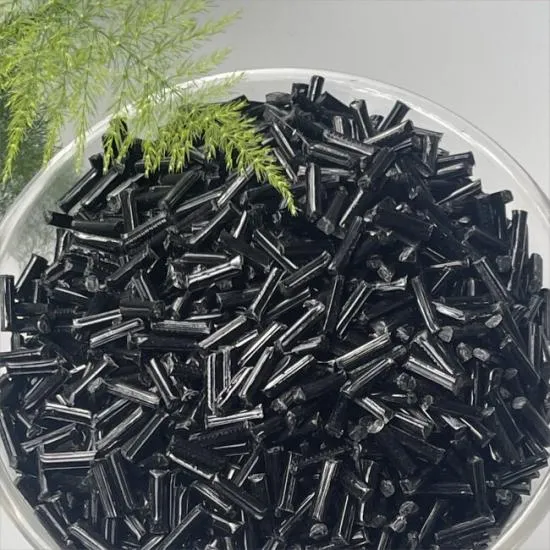
Reported Values for the LFT Carbon Fiber Composite Plastic
The table below lists the values recorded for the LFT carbon fiber composite plastic, together with the test standard named for each. The third column explains what each value is used for during material screening.
| Property | Standard | Reported value | How buyers use it |
|---|---|---|---|
| Tensile strength | ISO 527-2 | 350 MPa | First-pass check against load-bearing and structural requirements |
| Flexural strength | ISO 178 | 510 MPa | Bending load capacity in brackets, covers and frames |
| Flexural modulus | ISO 178 | 30,700 MPa | Stiffness and deflection control, often the deciding value in housings |
| Izod impact | GB/T 1843 | 40 kJ/m² | Impact and shock resistance in service and handling |
| Elongation at break | ISO 527-2 | 7.8% | Ductility versus brittle failure behavior |
| Density | Not stated in the parameter table | 1.28 g/cm³ | Weight estimation and comparison against metals |
The density value is the reference point most buyers use first, because it frames the lightweighting discussion: a composite with a density of 1.28 g/cm³ is compared against aluminium when a part is redesigned, and the comparison is normally run on part geometry rather than on raw material alone.
Verification note: these figures are reported in the supplier's product parameter table. Grade, specimen orientation, conditioning and the availability of an independent test report should be confirmed before the values are used for final design approval. The standard itself is not the evidence — the report behind it is.
The Compliance Layer: Certifications Behind LFT and LFT-G
For research-to-evaluation buying stages, certification is usually the first filter that eliminates suppliers. Three certificates are referenced for these products.
- Quality management system: GB/T19001-2016 / ISO9001:2015, certificate number IAS25924Q1858R0S, issued by Guangdong ZQ Certification Service Co., Ltd., applicable to the global market and valid from 22 October 2024 to 21 October 2027. It is referenced against the LFT and LFT-G products.
- Automotive quality management: IATF 16949:2016, certificate numbers ZA-FCAV No.: 2501627/R0S and IATF No.: 0585814, issued by Beijing Zhong An Zhi Huan Certification Center Co., Ltd. (DBA: Zhong An FCAV International), applicable to the global market and valid from 15 October 2025 to 14 October 2028. It is referenced against the LFT product.
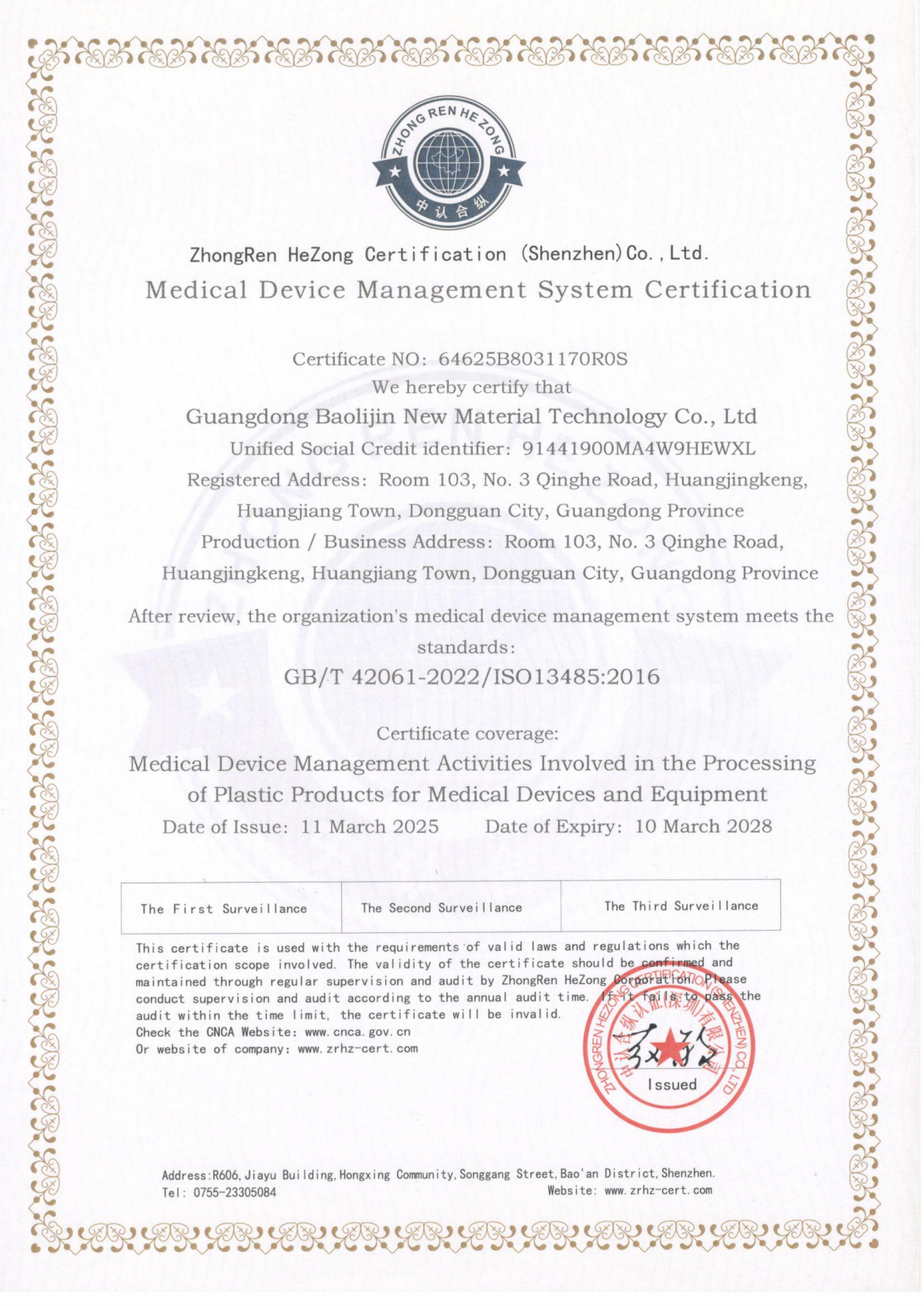
- Medical device management system: GB/T 42061-2022 / ISO 13485:2016, certificate number 64625B8031170R0S, issued by ZhongRen HeZong Certification (Shenzhen) Co., Ltd., applicable to the global market and valid from 11 March 2025 to 10 March 2028. Its scope covers medical device management activities involved in the processing of plastic products for medical devices and equipment, and it is referenced against the LFT-G product.
Two rules keep certificate review honest. First, a management system certificate is a statement about a system and a defined scope — not about the performance of any single part. Second, certificate numbers should be checked against the issuing body's register, because the value of the document lies in the scope wording and the validity window, not in the logo.
Step-by-Step: How to Compare an LFT and an LFT-G Offer
The sequence below is the order in which mismatches are normally found — and the order in which they are cheapest to fix.
- Identify the designation layer. Decide whether the quotation refers to a family (LFT), a reinforcement (LCF or LGF), or a catalogue grade (LFT-G). Ask for the model and type string in writing.
- Confirm the resin system. PP, PA6, PA66, PA/PA12, MXD6, PBT, PET, TPU, PPS, LCP and PEEK all appear in LFT practice, and the resin determines the thermal and chemical limits of the part.
- Confirm fiber type and loading. For LFT-G the stated loading is 20–60% long carbon fiber. A range this wide should be narrowed to a single figure for the grade quoted.
- Match each number to its standard. ISO 527-2 for tensile and elongation, ISO 178 for flexural properties, GB/T 1843 for Izod impact. A value without its standard cannot be compared.
- Check density and packaging. Density 1.28 g/cm³ supports weight estimation; packaging is 20–25 kg per bag and is customizable, which matters for handling and for automated feeding systems.
- Check certification scope and dates. ISO 9001:2015, IATF 16949:2016 and ISO 13485:2016 each cover different decision criteria. Confirm which certificate is referenced against the specific grade being quoted.
- Agree the validation path. Commercial terms stated for these products include a minimum order quantity of 50 units, a lead time of 30 days, 100% testing, and ODM customization covering material, mold opening and injection molding.
Where Each Grade Is Used
The application lists recorded for the two designations overlap in industry but not in part type.
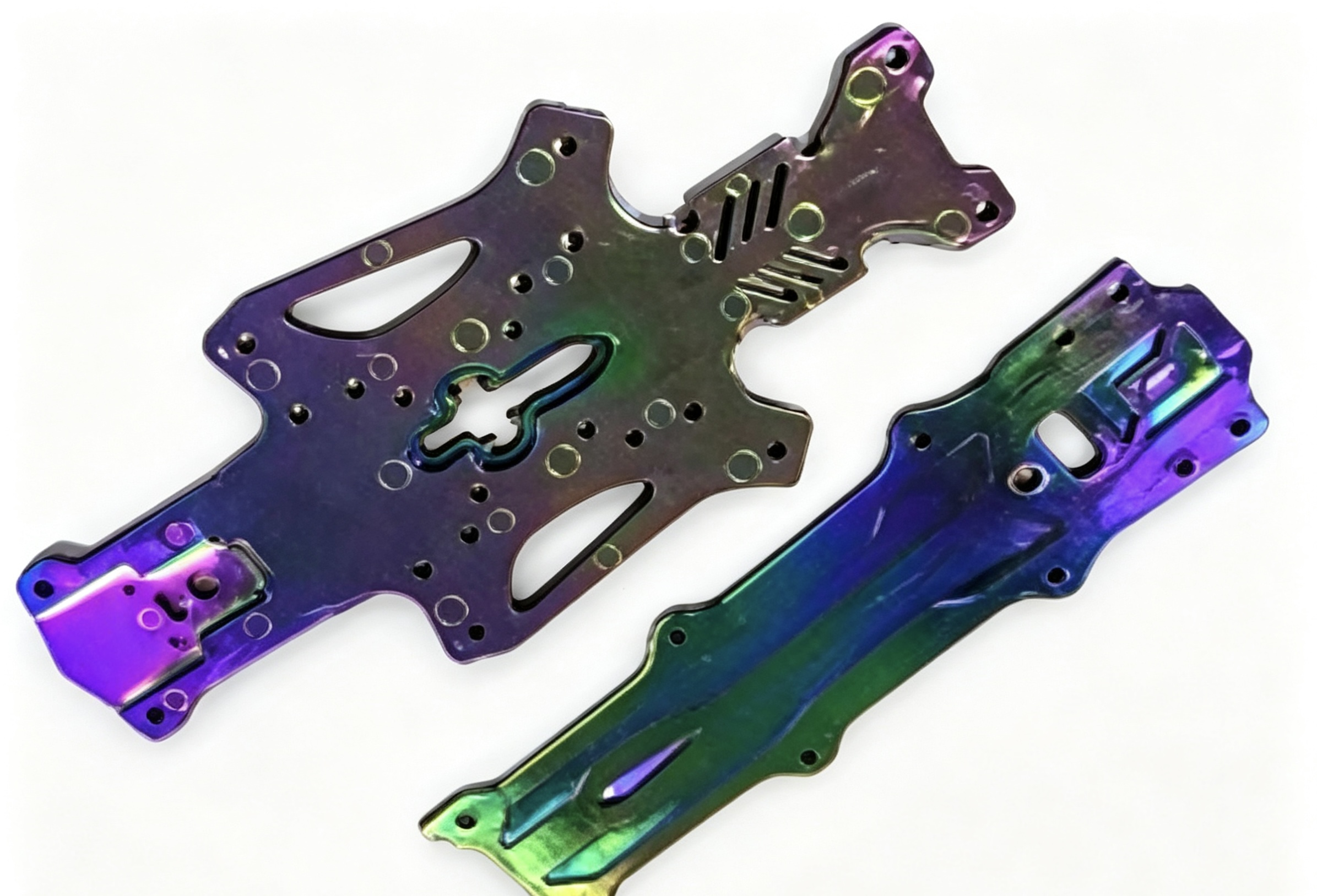
LFT-G long carbon fiber reinforced composite is positioned for commercial and military aerospace applications including radomes, drones, aircraft, missiles, satellites and aerospace fuel tanks. The LFT carbon fiber composite plastic is positioned more broadly across aerospace, military, new energy vehicles, the low-altitude economy, robotics, semiconductors and sports equipment.
Service conditions recorded for these applications include weight reduction in the 30–50% range against the parts being replaced, operating envelopes from -50°C to 120°C, fatigue and vibration resistance, dimensional stability, chemical resistance, and consideration of insulation or electromagnetic shielding requirements depending on the part. The relevant point for a buyer is that the grade label should be matched to the service condition, not to the industry name.
One documented program illustrates how the material choice plays out commercially. A new energy vehicle Tier 1 supplier has used an ODM arrangement for the upper cover and protective shell of a power battery pack, with high-voltage insulation, shock resistance and electrolyte resistance as the governing requirements. The program has run for eight years (2018–2026) at 120,000 units per year. Reported outcomes include a 42% weight reduction compared with aluminium, an 18% cost reduction, passing UL94 V0 and IP6K9K, and no after-sales cracking or leakage. Technical notes for the part include integrated injection molding of long carbon fiber, a coefficient of thermal expansion of 28 ppm/°C compatible with aluminium, and low float fiber suitable for high-speed mass production.
LFT vs. LFT-G at a Glance
The comparison below uses only the values recorded for these products. Where a value is not stated in the source data, the table says so rather than filling the gap.
| Attribute | LFT (also recorded as LCF/LGF) | LFT-G |
|---|---|---|
| Type designation | LFT Carbon Fiber Composite Plastic | LFT-G long carbon fiber reinforced composite |
| Composition | Resin + carbon fiber | Long carbon fiber reinforced composite |
| Long carbon fiber content | Not stated as a range in the source data | 20–60% |
| Color / form | Not stated in the source data | Black |
| Density | 1.28 g/cm³ | Not stated in the source data |
| Tensile strength | 350 MPa (ISO 527-2) | Not stated in the source data |
| Flexural strength | 510 MPa (ISO 178) | Not stated in the source data |
| Flexural modulus | 30,700 MPa (ISO 178) | Not stated in the source data |
| Izod impact | 40 kJ/m² (GB/T 1843) | Not stated in the source data |
| Elongation at break | 7.8% (ISO 527-2) | Not stated in the source data |
| Packaging | Not stated in the source data | 20–25 kg/bag, customizable |
| Stated performance positioning | High-strength long fiber composite | High strength, high toughness, durability |
| Applications listed | Aerospace, military industry, new energy vehicles, low-altitude economy, robotics, semiconductors, sports equipment | Radomes, drones, aircraft, missiles, satellites, aerospace fuel tanks |
| Certificates referenced | ISO9001:2015 / GB/T19001-2016; IATF 16949:2016 | ISO 13485:2016 / GB/T 42061-2022; ISO9001:2015 / GB/T19001-2016 |
Frequently Asked Questions
What certifications cover LFT and LFT-G carbon fiber composite plastic?
Three certifications are referenced for these products. The quality management system certification GB/T19001-2016 / ISO9001:2015, certificate number IAS25924Q1858R0S, was issued by Guangdong ZQ Certification Service Co., Ltd. and is valid from 22 October 2024 to 21 October 2027. The automotive certification IATF 16949:2016 is referenced against the LFT product, with certificate numbers ZA-FCAV No.: 2501627/R0S and IATF No.: 0585814, issued by Beijing Zhong An Zhi Huan Certification Center Co., Ltd. (DBA: Zhong An FCAV International) and valid from 15 October 2025 to 14 October 2028. The LFT-G product is covered by a Medical Device Management System Certification to GB/T 42061-2022 / ISO 13485:2016, certificate number 64625B8031170R0S, issued by ZhongRen HeZong Certification (Shenzhen) Co., Ltd. and valid from 11 March 2025 to 10 March 2028. All three apply to the global market, and buyers should confirm certificate numbers and scope wording with the issuing bodies.
How much long carbon fiber does LFT-G contain, and which mechanical values are reported?
LFT-G is specified as being made of 20–60% long carbon fiber, supplied as a black material and described as high strength, high toughness and durable. The numeric mechanical values recorded in the product data belong to the LFT carbon fiber composite plastic grade: tensile strength 350 MPa under ISO 527-2, flexural strength 510 MPa and flexural modulus 30,700 MPa under ISO 178, Izod impact 40 kJ/m² under GB/T 1843, elongation at break 7.8% under ISO 527-2, and a density of 1.28 g/cm³. These are supplier-reported figures, so a buyer should request grade-specific test reports — including specimen orientation and conditioning — before using them for design approval.
What drives the cost of LFT carbon fiber composite plastic?
No price figures are published in the product data, so cost should be treated as a function of specification rather than as a fixed number. The main cost drivers are the resin system — polypropylene is the most widely used base resin, followed by PA6, PA66, PA/PA12, MXD6, PBT, PET, TPU, PPS, LCP and PEEK — the fiber type and loading, with LFT-G specified at 20–60% long carbon fiber, and the tooling and injection molding work involved in converting the material into a part. Order volume relative to the stated minimum order quantity of 50 units, packaging format (20–25 kg per bag, customizable) and the stated 30-day lead time also enter the commercial calculation. A documented new energy vehicle battery pack program reported an 18% cost reduction alongside a 42% weight reduction compared with aluminium, which shows how the comparison is normally framed: against the part and process being replaced, not against material price per kilogram alone.
Can a buyer validate the material before committing to volume production?
Validation is part of the stated service model. The production mode recorded is ODM, with customization covering the material, mold opening and injection molding, and quality control stated as 100% testing. The minimum order quantity is 50 units, and after-sales support is provided remotely. Buyers can therefore structure a validation path around a trial quantity, a molded part check against the relevant standards (ISO 527-2, ISO 178, GB/T 1843), and a review of the certificate scope for the specific grade. Requests for samples and technical documents can be sent to baolijin@carbolft.com or via WhatsApp at +86 18664191149.
What is the lead time, and how is supply continuity handled?
The stated lead time is 30 days, with a monthly capacity of 12,000 units recorded for the production operation. Export markets are listed as Europe, America and Southeast Asia, and the company reports an export ratio of approximately 30% of output. For long fiber composite parts, the practical continuity question is usually whether the same grade and resin system can be reproduced at the quoted loading — so it is worth agreeing the grade reference, the test standard and the acceptance criteria in writing before the first production order. A full product brochure with specifications is available for download here.
Conclusion: Read the Layers, Then Read the Numbers
LFT and LFT-G are not rival materials. LFT describes the long fiber reinforced thermoplastic family and its 5–25 mm fiber process; LCF and LGF describe whether the reinforcement is long carbon fiber or long glass fiber; LFT-G is the catalogue designation for Polygram's long carbon fiber reinforced composite grade at 20–60% fiber loading. The reported mechanical values — 350 MPa tensile strength under ISO 527-2, 510 MPa flexural strength and 30,700 MPa flexural modulus under ISO 178, 40 kJ/m² Izod impact under GB/T 1843, 7.8% elongation at break and 1.28 g/cm³ density — are published against the LFT grade and should be requested grade-specifically before design approval.
For teams in the research and evaluation stages, the workable sequence is: identify the designation layer, confirm resin and fiber loading, match each number to its test standard, then check certificate numbers and scope against the issuing body. That sequence resolves most of the apparent contradictions between quotations long before price negotiation begins.
Next step. Polygram (Guangdong Baolijin New Material Technology Co., Ltd.) supplies thermoplastic (LFT) carbon fiber composites, conductive and antistatic plastics, and graphene thermally conductive plastics, with one-stop support from material design and raw material production through mold development to injection molding.
Request a sample, a grade-specific test report or a quotation: baolijin@carbolft.com · WhatsApp +86 18664191149 · www.carbolft.com
Download the product brochure: LFT Carbon Fiber Composite Plastic Catalogue (PDF)
Have Questions or Need More Details?
Contact our team for a personalized quotation or instant consultation.
Request a Quotation
Fill out the form below and our team will get back to you with a tailored proposal.
WhatsApp Direct Chat
Prefer to chat in real-time? Message us on WhatsApp for instant assistance & quick answers.
- Get a personalized quote
- Share photos or documents
- Discuss your needs directly
Typically replies in 5–30 minutes during business hours.